
With the collaboration of Caique Amorim
The proposal for the Fixed-Time Tariff, presented by the technical areas of ANEEL (National Electric Energy Agency) this Monday (9), was received with reservations by entities in the energy sector.
While acknowledging the importance of modernizing the tariff structure, the associations raise concerns about the impacts on investments in self-generation, legal certainty, and the development of energy storage.
The new model foresees the differentiation of electricity prices according to the time of consumption, with higher rates during periods of higher demand and lower rates during hours of greater energy availability.
The implementation should occur gradually starting in 2028, reaching low-voltage consumers. The proposal is still pending a decision by the board of directors of... ANEELHowever, the expectation is that the process will be completed by December.
Although they acknowledge the importance of signaling energy costs throughout the day, the associations interviewed by Canal Solar They believe that the change needs to be accompanied by favorable economic and regulatory conditions so that consumers can adapt their habits and invest in solutions such as batteries.
ABSOLAR questions the effectiveness of the tariff and incentives for batteries.
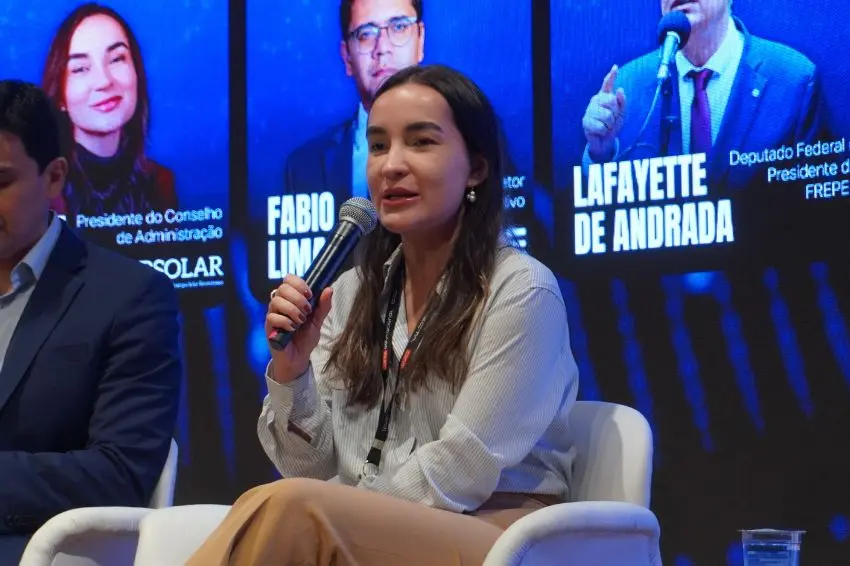
A ABSOLAR The Brazilian Photovoltaic Solar Energy Association recognizes that the creation of a price signal for low-voltage consumers represents a natural evolution of the market and can contribute to a more balanced operation of the SIN (National Interconnected System).
Bárbara Rubim, president of the entity's Board of Directors, also highlighted the discussion process conducted by ANEEL over the course of almost a year, with opportunities for dialogue between the agency and industry stakeholders.
However, one of the association's main concerns involves the ability of the new tariff to stimulate effective changes in consumer behavior and encourage investment in storage.
According to Bárbara, there was an expectation within the sector that the time-of-use pricing model would also serve as an incentive for the adoption of batteries. However, she cautions that simply differentiating prices according to the time of day may not be enough to shift consumption or the injection of energy into the grid.
To support this assessment, the professional cited international experiences in England, Germany, Australia, and Italy, as well as Texas and California in the United States. According to her, the adoption of tariff signals in these markets was not, by itself, sufficient to significantly alter consumption habits.
In evaluating the ABSOLARThe effectiveness of the measure will depend on the difference between the prices of the tariff periods. If this variation is not significant, the economic signal may not be sufficient to stimulate changes in consumption habits or investments in storage.
As a result, the fare risks changing the amounts charged depending on the time of day, but without producing the operational effect expected by... ANEEL: reduce the injection of surplus energy into the grid between 11 am and 15 pm or encourage shifting consumption to that period, when there is greater availability of solar generation.
"A price signal alone, especially if the tariff points don't have a significant difference between them, won't be able to cause that change in behavior," Bárbara stated.
The president also drew attention to the risk that the new tariff structure could reduce the remuneration received by consumers who inject surplus energy into the grid during the day, without offering proportional economic incentives for the installation of batteries.
In evaluating the ABSOLARThis scenario could penalize those who invested in their own power generation based on existing rules and public policy signals, without necessarily producing the operational change expected by the agency.
Another point raised is the legal security of investments already made. For Bárbara, the ANEEL It is necessary to consider the expected financial return of consumers and investors who installed photovoltaic systems under the previous rules.
The organization therefore argues that any changes should be accompanied by transition mechanisms capable of preserving the economic predictability of projects and the expected return on investments made.
INEL demands investments in networks and balanced treatment for batteries.
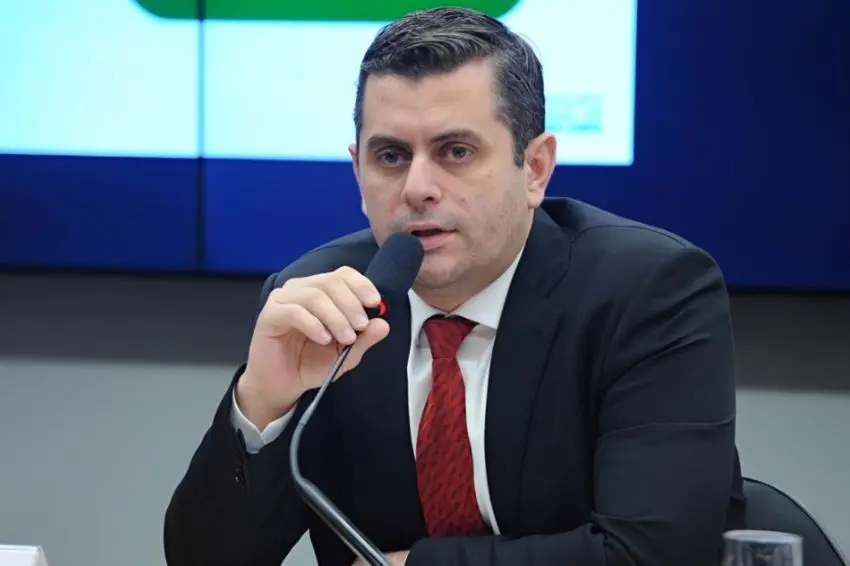
INEL (National Institute of Clean Energy) considers the possibility of shifting consumption to times of greater availability of renewable energy and lower prices to be positive.
However, the organization believes that the effectiveness of the "Tarifa Hora Certa" (Specific Time Tariff) depends on investments in electrical infrastructure, transparency regarding the impacts on consumers who already have their own generation, and the expansion of accessible energy storage alternatives.
“Shifting consumption to times when there is more clean energy and lower prices can benefit both the consumer and the system. But, to work, the 'Tarifa Hora Certa' (Specific Time Tariff) needs to be accompanied by investments in networks, transparency about the impacts for those who already generate their own energy, and accessible alternatives, such as energy storage,” stated Heber Galarce, president of the organization.
Galarce also questioned the regulatory treatment given to the different technologies used to ensure energy availability.
According to the president, the mechanisms currently being discussed for contracting capacity could result in different treatments for technologies such as battery storage systems and thermal power plants.
According to INEL's assessment, this issue deserves greater regulatory debate and transparency regarding the allocation of costs among the sector's agents.
According to the organization, any differences in treatment should be analyzed in light of the benefits that each technology can offer to the operation and reliability of the electrical system.
“It is legitimate to ask why technologies that also bring benefits to the system receive different treatment. Brazil needs a coherent policy that encourages flexibility and gives citizens real conditions to participate in the energy transition,” he added.
ABGD questions the automatic classification of existing systems.

ABGD (Brazilian Distributed Generation Association) also supports the modernization of the tariff structure and recognizes the role of ANEEL in conducting the discussions.
However, the entity states that it is still deepening its analysis of the technical note and the regulatory impact analysis presented by the Agency before defining a definitive position.
The association commissioned two studies to assess the effects of the proposal: a legal opinion prepared by the Lefosse law firm on the legality of the measure, and an analysis by Thymos Energia on the impacts on the bills of consumers who have their own generation.
The main question involves the automatic classification of distributed generation units under the categories outlined in articles 26 and 27 that have an average consumption or injection exceeding 500 kWh per month.
According to the proposal, these consumers will be gradually incorporated into the Time-of-Use tariff starting in 2028, with the possibility of temporary exclusion during the transition period.
According to Rose Santos, president of ABGD, the organization seeks to understand how this rule relates to the benefits established by Law 14.300, which, according to her interpretation, ensures specific conditions for consumers covered by articles 26 and 27 until 2045.
The association also questions the need for new investments in storage so that these consumers can respond to the tariff signals. "To react to the new signal, consumers under articles 26 and 27 would need to invest again, in batteries. And the risk to them was measured in our studies," Rose stated.
According to the organization, voluntary participation could represent an alternative to reconcile tariff modernization with the preservation of investments made in self-generation.
“If voluntary participation protects minors, it can also be the natural bridge for consumers under articles 26 and 27. It respects the law, preserves investment, and does not hinder modernization. Those who have an advantage, for example with storage, will migrate by their own choice,” he argued.
Shared generation is also a concern.
Another point raised by ABGD involves consumers served by shared and remote generation models, such as participants in solar energy subscription services.
According to Rose, the studies presented so far have not identified a specific assessment of the effects of the proposal on these consumers, which include families and small businesses that receive energy credits without owning their own photovoltaic installation.
"So far, the study has not identified a measure of the impact on those who receive these credits. These are families and small businesses that have contracted solar energy through subscriptions. This effect is important for their decision-making. It is also important for the consumer, who has the right to know, clearly, what changes in their bill," he stated.
The president added that the association intends to present its studies to the board of directors. ANEEL and contribute to the next stages of tariff modernization.
According to the organization, changes to the billing structure and the preservation of the rights of consumers who have invested in distributed generation need to move forward together. "Modernizing the tariff and honoring the law are not opposing objectives," concluded Rose Santos.
all the content of Canal Solar is protected by copyright law, and partial or total reproduction of this site in any medium is expressly prohibited. If you are interested in collaborating or reusing part of our material, please contact us by email: redacao@canalsolar.com.br.

Comments
Comments are moderated before publication.Comments should be respectful and contribute to a healthy debate. Offensive comments may be removed. The opinions expressed here are those of the authors and do not necessarily reflect the views of the author. Canal Solar.