
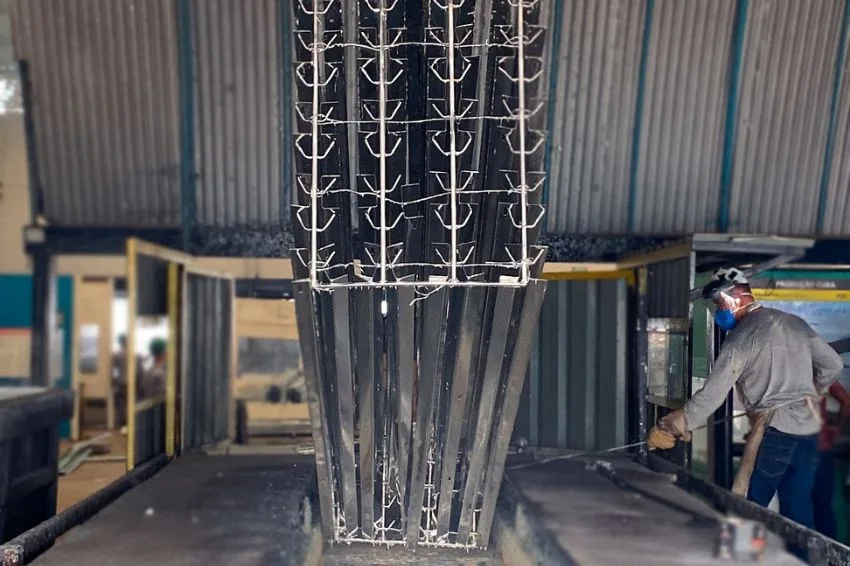
Corrosion is one of the biggest offenders to metal structures, affecting more than 20% of power plants, generating high maintenance costs and structural wear. Corrosion occurs when the iron in steel interacts with atmospheric oxygen, generating ferrous oxide (rust). Many solar power plants suffer from this problem, drastically reducing their lifespan.
Hot-dip galvanizing is a process of applying a zinc coating to steel or cast iron, with the aim of increasing its useful life, preventing degradation. aço due to corrosion. This process can be divided into two types: pre- and post-galvanizing.
Continuous galvanizing, known as "pre-galvanizing," is performed on steel sheets produced by steel mills. The sheets are formed and cut after the sheet/coil is galvanized, resulting in zinc thicknesses of up to 50 µm (micrometers), 25 µm per side (see Figure 1). Therefore, compared to batch hot-dip galvanizing, which achieves zinc thicknesses of up to 84 µm, the service life of pre-galvanized sheets is shorter. Figure 1 illustrates the process steps.
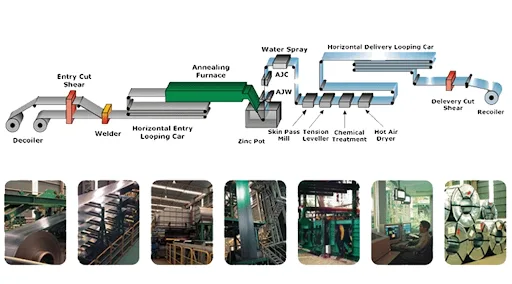
For example, a sheet of pre-galvanized steel ZAR300 Z275 has 275g/m² and the density of Zinc is 7,14g/cm³, therefore, the maximum protection thickness is 38,5 µm with an average thickness of 25 µm.
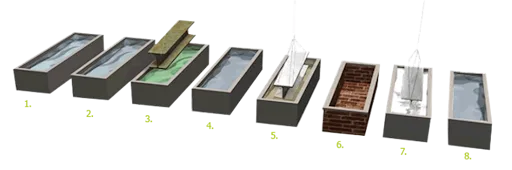
In post-galvanizing, the zinc plating is the final step in the process, performed after six stages of chemical cleaning of the part, allowing for greater zinc thicknesses (see Figure 6). The greater the thickness, the longer the part's service life. Currently, Grupo Metal Light structures have an average layer thickness of 2 µm, safely supporting the 70-year corrosion warranty.
A region's corrosivity level is classified into levels, with C1 being the lowest and C5 the highest. Most of Brazil is in a region classified as C2, and as a safety factor, Grupo Metal Light considers it a C3 environment. For C3, the zinc degradation rate is 0,7 µm to 2,1 µm per year.
Considering the maximum degradation of the C3 environment, the useful life of ZAR300 Z275 is 11 years, not counting areas where the galvanizing was damaged during forming, which can further reduce this lifespan. The useful life of Metal Light Group parts using post-galvanized steel, in the same environment, is up to 33 years, three times longer.
Case
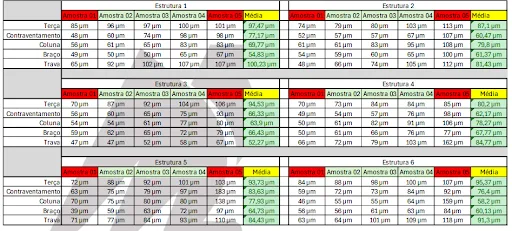
In a plant equipped with Metal Light Group equipment installed 2 years ago, located in a city in Rio Grande do Norte, we found an average of 75,7 µm of protection after 2 years of exposure to the environment, which indicates that the useful life of this plant will be over 38 years safely.
The opinions and information expressed are the sole responsibility of the author and do not necessarily represent the official position of the author. Canal Solar.

Comments
Comments are moderated before publication.Comments should be respectful and contribute to a healthy debate. Offensive comments may be removed. The opinions expressed here are those of the authors and do not necessarily reflect the views of the author. Canal Solar.