
The renewable energy sector has witnessed remarkable advancements in recent decades, with solar energy emerging as one of the main sources of clean electricity. However, a challenge faced by many photovoltaic plants is the efficiency in energy production.
The most important activity to guarantee the performance and longevity of the photovoltaic system, and which is directly linked to the increase in energy production and maintenance costs, is the cleaning the modules.
In this article, we will explore how introduction of cleaning robot may or may not increase the productivity of photovoltaic plants and reduce operating costs. Photovoltaic plants rely on the ability of solar panels to capture sunlight to generate electricity.
However, over time, these panels can accumulate dust, dirt and other debris, compromising its efficiency.
Studies show that the Dirt can reduce energy generation by up to 30%, resulting in significant generation losses. Therefore, the regular maintenance is crucial to ensure maximum performance of these installations.
A cleaning of plant modules accounts for up to 70% of O&M cost, depending on the type of plant and the installation location. The adaptation of projects seeking to solve engineering problems, reduce implementation costs and reduce installation time has an impact on the cost of maintenance and cleaning of solar panels.
It is important to understand that each plant is exposed to different forms of “environmental degradation”. A Ambiental degradation refers to the process by which the environment around a specific area suffers damage or deterioration due to various factors, including air pollution, human activity, weather conditions, and interactions with local fauna and flora.
This phenomenon can directly influence the accumulation of dirt and debris on the surface of photovoltaic modules.
We can highlight the following types of dirt that cause impacts on plants: accumulation of dust or dirt, very common in rural areas close to plantations where there is a lot of movement of trucks and tractors, this type of dirt usually directly impacts the absorption of sunlight by the module, as it creates a barrier across the entire surface of the module.
Although strong winds or rain can remove most of this fine layer of dust, it can become a major problem in regions that go without rain for a long time, during the dry winter, or when dew forms in the morning, which in Contact with dust ends up forming a thicker, more adherent layer that is more difficult to remove.
Another problem is the poultry and bird droppings, which in addition to impacting energy generation by blocking solar incidence, is a localized shadow that ends up generating a “hotspot”, or specific heating of a cell.
Those hotspots reduce the power of the modules and the useful life of the equipment, being one of the main responsible for the loss of performance and module degradation.
In urban areas, we have a lower incidence of birds and dust common in rural environments, but the pollution can be an even bigger problem. Plants very close to highways or large centers are subject to soot from the burning of fuel from cars and industries.
A soot is a black, greasy matter, which hinders the absorption of light by the module and adheres to the glass, requiring mechanical cleaning to remove.
Depending on the industry sector, especially those that work with materials in powder form such as glass, ceramics and wood, these will certainly impact the performance of the plants installed close to them.
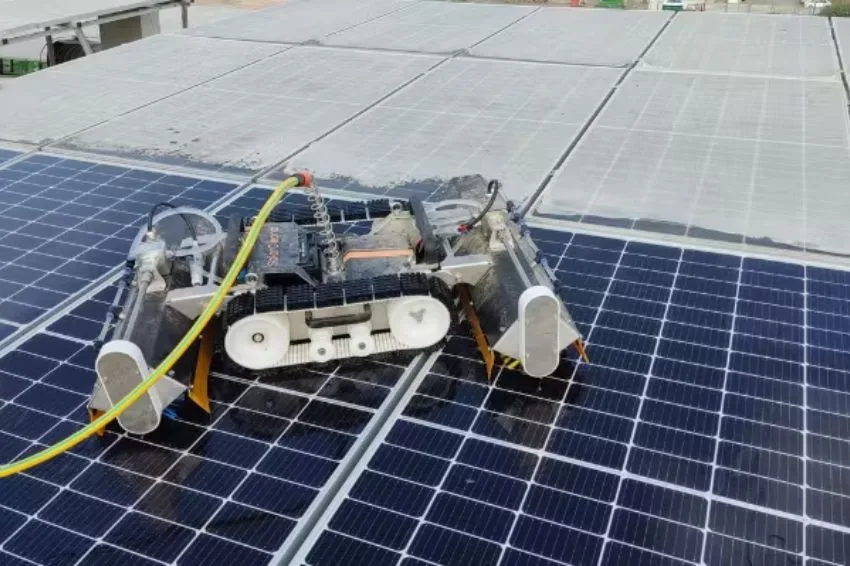
O module assembly system also impacts dirt, in soil plants with trackers, during most of the day the modules have a large inclination, reaching up to 50°, which helps to remove debris naturally through the action of wind and rain.
Fixed ground structures have an inclination of around 22° which makes it difficult for dirt to accumulate. Industrial roofs and carports usually have very small slopes, of a maximum of 5°, which facilitates the deposition and accumulation of debris. When it rains, water with all the dirt accumulates at the lowest point of the module and after evaporation it creates a large stain. very specific that hinders energy production.
The main point is to understand that each plant needs specific care, there are generic approaches that give positive results for a large part of systems, but when we talk about high efficiency and performance we need to study and understand each project to define the best maintenance method, whether preventive or predictive.
Historically, the cleaning of solar panels was carried out manually by teams of workers. However, this approach presents considerable challenges that impact both operational efficiency and employee safety.
The manual task is intrinsically time-consuming and costly, not only for centralized generation, but also for distributed generation, as systems above 150 kWp already require a significant allocation of human resources.
Furthermore, worker safety is often compromised, especially in plants located in difficult-to-access areas such as rooftops and carports.
Manual mode is often even impossible to use depending on the arrangement of the modules, for example in plants where there is no distance between tables.
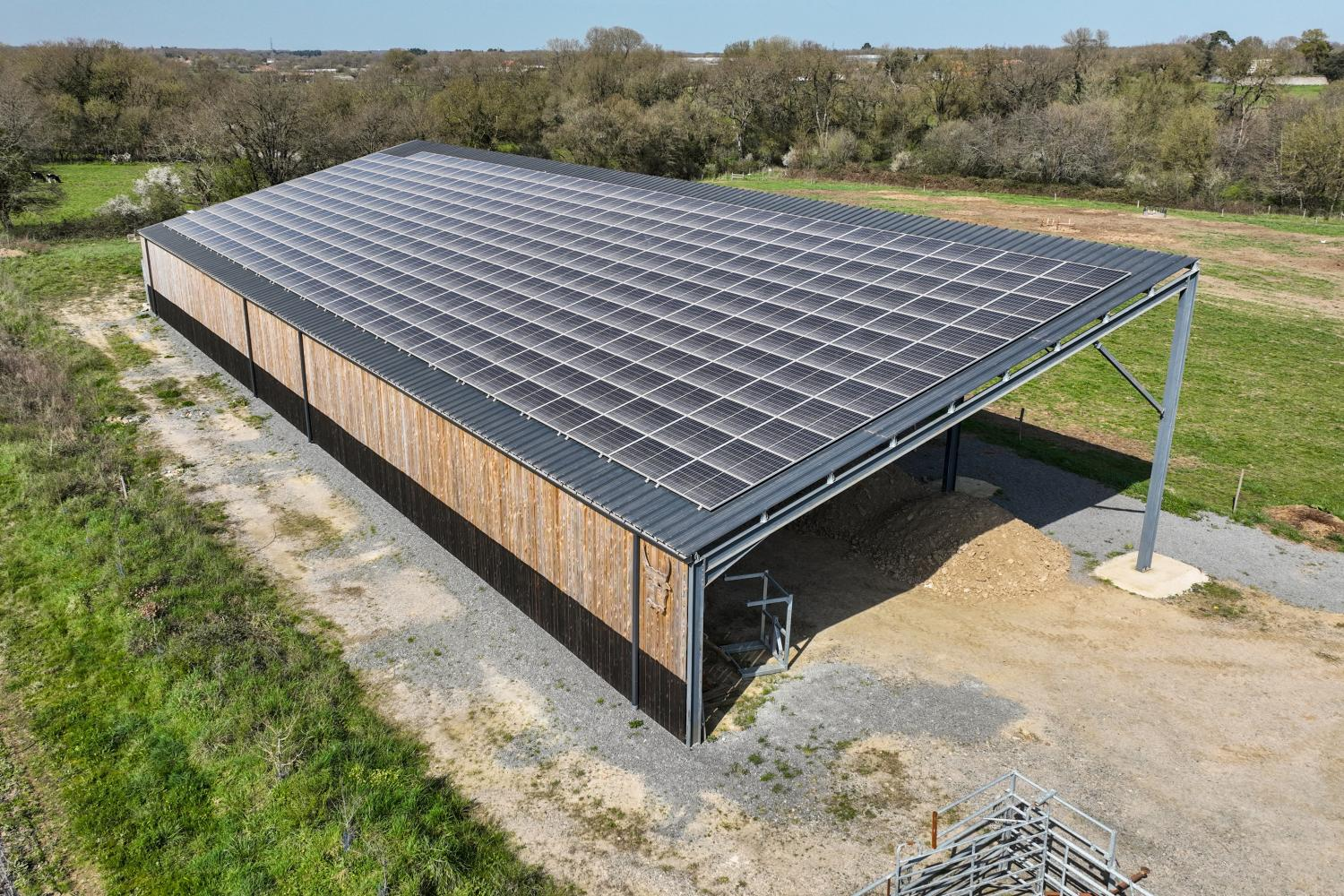
The introduction of cleaning robots represents an innovation in the maintenance of photovoltaic plants. These devices are designed to run through solar panels, efficiently removing dirt and debris, all without the need for constant human intervention.
A variety of cleaning robot models are being developed and implemented, each designed to meet the specific needs of solar plants. We can highlight the following models:
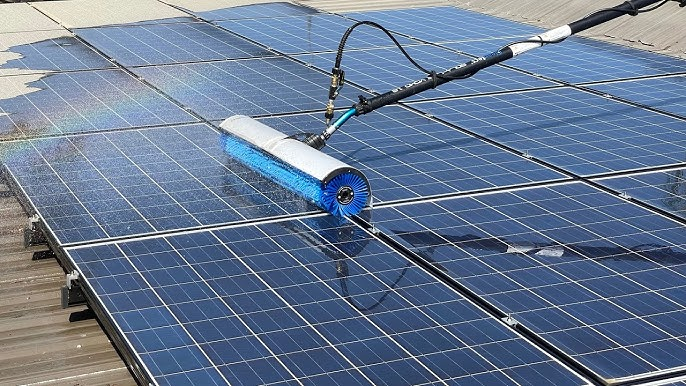
Rotative brush
The rotating brush model is the simplest, it is an adaptation to the manual brush so that, through an electric motor or compressed water propulsion, the brush has power and movements that remove dirt from the modules.
This reduces human effort to scrub, but there is still the need for an operator to carry and direct the brush throughout the plant. The main advantages are reduced effort and increased cleaning speed, which directly impacts productivity.
Treadmill cleaning robot
This robot model, which can be operated by remote control or be completely autonomous, stands out for its versatility.
As this is equipment that does not depend on human movement, it has a much higher cleaning speed and the movement system using conveyor belts means that it can be used in the vast majority of assembly systems, from ground plants to power plants. roof and floating.
It has the ability to overcome obstacles and has enough power to increase the productivity of a single person by around 10 to 30 times depending on the size and model.
The fact that it depends on batteries ends up limiting the size of the brushes.
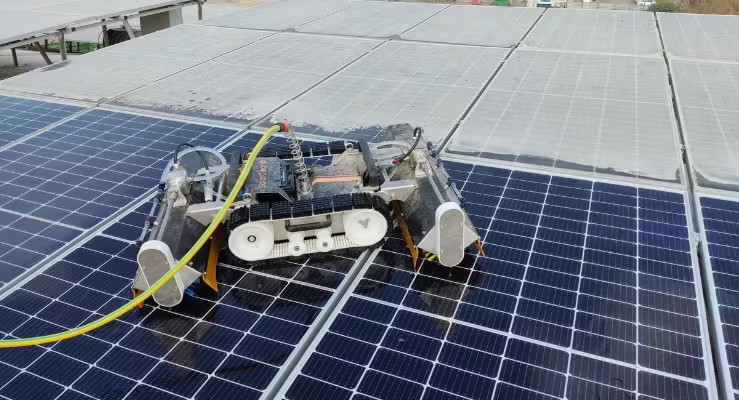
Table-mounted cleaning robot
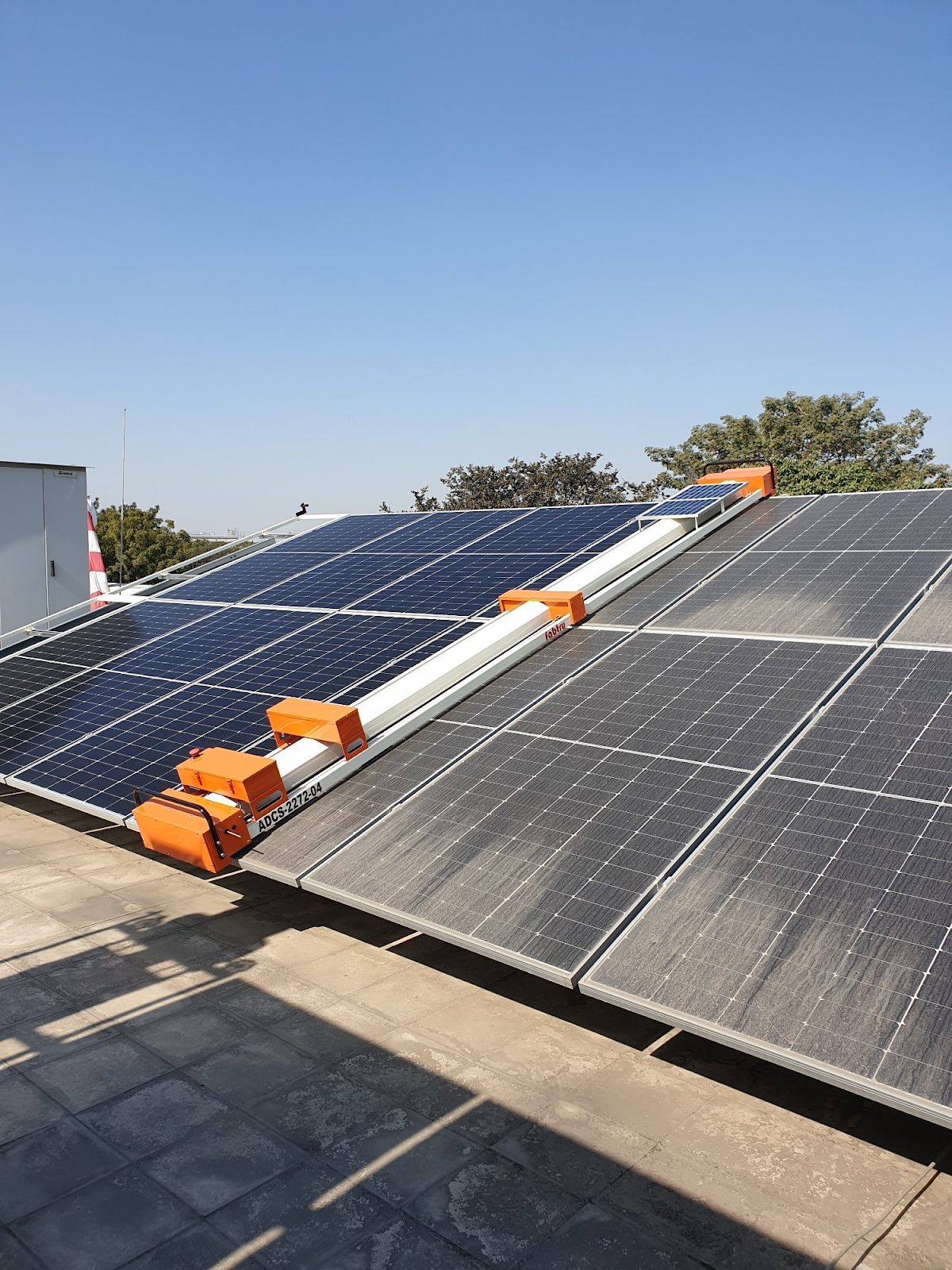
This model is used in soil plants and must be designed according to the size and number of modules of each system, it can be moved automatically or by human propulsion.
It stands out for being able to clean one to three modules in a single movement, depending on the size of the table, this means that productivity is very high and water consumption is very low, but it takes a long time to setup higher, especially in plants with short tables, it is more suitable for places where the tables are longer.
Articulated mechanical arm
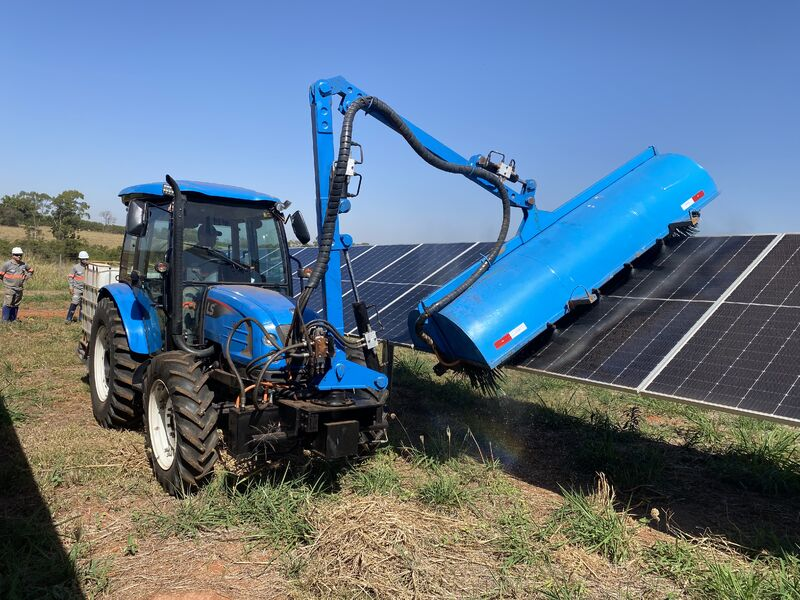
It can be an implement for tractors, or even a machine completely developed for this type of application, the articulated arm is a large rotating brush that can be the size of one to two modules.
This type of machine has enormous strength and as it is attached to a motorized vehicle it does not depend on a battery or power supply to operate, the strength of the hydraulic motor also ensures that a large brush can be used, which can increase cleaning speed. .
It is suitable for centralized generation, has the capacity to clean an average of 10.000 modules per day, but the plant's terrain must be flat, without interference and that the corridors must be large enough to move the tractor, which ends up limiting its use. or decreasing productivity.
The cleaning robots are capable of operating continuously, ensuring regular and efficient cleaning of the modules. This results in better, more consistent light absorption and optimized electrical output over time, as well as being highly efficient at removing dirt and debris.
Cleaning robots are designed to adapt to a variety of surfaces and most models are capable of operating in a variety of weather conditions. Some models are equipped with remote monitoring systems that allow real-time monitoring of performance and autonomous operation.
Despite the significant initial investment in purchasing and implementing cleaning robots, the long-term savings are notable.
Less need for human labor and better plant performance contribute to more economical operation, offsetting initial costs. The use of cleaning robots eliminates worker exposure to dangerous conditions and challenging environments.
This not only improves workplace safety but also reduces the risks associated with manual operations. In addition to the economic and operational benefits, the implementation of cleaning robots in photovoltaic plants also has a positive impact on the environment.
A reduced water consumption when cleaning, compared to conventional methods, contributes to the conservation of water resources and lower operating costs.
To increase the productivity of photovoltaic plants, it is necessary to keep the modules always clean, but the periodicity of cleaning is different for each plant and will only be known after implementation and energization.
However, there are some rules that can be considered, many module manufacturers and experts in the field agree that once a year is the minimum cleaning necessary to guarantee the useful life and warranty of the equipment, some literature cites a minimum of twice a year.
We can also consider that optimized cleaning is carried out as needed, that is, when the cost of cleaning is equal to the return from energy generation, but finding this ideal point depends on many variables and mainly the cost of cleaning.
Due to the high initial investment, there are few plants where the purchase of a robot dedicated to that plant is financially justified, so hiring specialized companies has proven to be the best approach to cleaning plants, regardless of size.
The use of cleaning robots in photovoltaic plants emerges as an effective strategy to boost productivity and maximize the efficiency of solar panels.
Automating this process not only optimizes preventative maintenance, reducing long-term costs, but also significantly contributes to maintaining the structural integrity of equipment.
However, when considering the implementation of this technology, choosing a specialized company proves to be a crucial advantage.
Specialized companies offer technical expertise, appropriate equipment and trained professionals, ensuring a systematic and efficient approach to cleaning solar panels.
The opinions and information expressed are the sole responsibility of the author and do not necessarily represent the official position of the author. Canal Solar.



Comments
Comments are moderated before publication.Comments should be respectful and contribute to a healthy debate. Offensive comments may be removed. The opinions expressed here are those of the authors and do not necessarily reflect the views of the author. Canal Solar.