

The Energy Summit 2025 brought together, for three days in Cidade das Artes, in Rio de Janeiro, the main leaders in energy, technology, science, sustainability and public policy formulation.
Recognized as MIT's largest event outside the United States, the meeting has established itself as a strategic global forum to discuss the paths of energy transition in Brazil and the world.
At the opening, Hudson Mendonça, CEO of the event, highlighted that the Energy Summit is a platform that connects innovation, public policies and sustainability. Alongside him, international references such as Lars Frølund, an MIT expert in deep tech investment, and Travis Hunter, director of MIT REAP, argued that the success of the energy transition requires collaborative ecosystems that unite governments, companies, academia and society.
Brazil's strategic role was evident in the participation of public sector representatives, such as Cássio Coelho, Secretary of Energy and Marine Economy of Rio de Janeiro, and Nicola Miccione, Secretary of the State Civil House. Both stressed that integrated public policies are essential to accelerate a green economy in the country.
Companies like PetroRepresentatives from Brazil were also present. William Nozaki, executive manager of the state-owned company, highlighted that the company is committed to providing energy responsibly, investing in more sustainable fuels and in the energy transition.
Stage highlights: innovation, sustainability and energy geopolitics
Edison Stage: Technology, Infrastructure and Decarbonization
The Edison stage brought together experts to discuss everything from the use of bioenergy, through the decarbonization of the maritime sector, to the role of governments in developing a low-carbon economy.
In the panel on infrastructure, Renato Junqueira, from Adecoagro, brought insights on innovation in the ethanol chain and future possibilities such as green ammonia and sustainable mining.
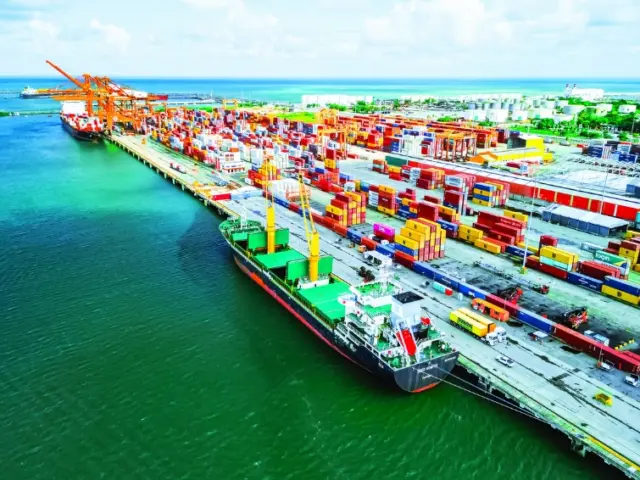
Another important topic was the decarbonization of the maritime sector, which, according to Sergio Chaves, from the RJ Energy Secretariat, will depend on the creation of “green corridors” and the modernization of port infrastructure, prioritizing locations that offer clean energy.
At the end of the day, a debate on public policies highlighted that sustainable actions need to be State projects, not government projects, to ensure continuity and effectiveness.
Nova Stage: where innovation is born
Nova Stage was the stage for discussions on investment in innovation, venture capital and the development of scalable solutions for the energy transition.
Lívia Brando, from Vox Capital, highlighted that venture capital is essential to unlock innovative energy solutions, especially in light of the climate emergency. The executive reinforced the need to increase investments in infrastructure, research, development and innovation.
Complementing the vision, Iggor Gomes Rocha, from Itaipu Binacional, explained how public purchases can be a lever for innovation, connecting social demands, sustainability and energy efficiency.
The closing panel featured Repsol Sinopec Brasil, with Raquel Mattos Cavalcanti, who emphasized that strategic partnerships and open innovation are fundamental to accelerating the energy transition in Brazil and the world.
Masterclasses and parallel experiences: energy, art and science
The masterclasses provided high-level debates. Highlights included the presentation by Navid Samandari, who discussed the challenges and opportunities of next-generation nuclear energy, and the class led by Luiz Felipe Pellegrini, from Copa Energia, on the energy trilemma – how to balance safety, sustainability and accessibility.
The Science & Art stage promoted an unprecedented sensory experience, with artists transforming geology into art, highlighting that the energy transition is also a cultural transformation.
Parallel events, such as Electric Days and Women in Energy, brought debates about the role of storage systems, the importance of diversity in energy leadership and the need to think about regenerative models, such as the circular economy, for a sustainable future.
Day Three: Climate Justice, Mining and Energy Geopolitics
The last day of the event reinforced Brazil’s global protagonism in the energy debate. On the Spark Stage, the director of the Brazil-China Business Council (CEBC), Cláudia Trevisan, highlighted China’s role as a leader in the global energy transition, investing heavily in green hydrogen, solar energy and electric mobility.
On the Edison Stage, the debate on mining made it clear that the energy transition depends directly on sustainable supply chains for critical minerals, essential for batteries, turbines and solar panels.
Nova Stage discussed climate justice, with CAFRAM representative Theo Schunck advocating for a transition that respects local realities, especially on the African continent.
The En-ROADS tool, presented by BNDES, allowed participants to simulate energy and climate scenarios, highlighting that solutions are available, but require coordinated action between countries and alignment of public policies.
Closing with concrete commitments
At the closing ceremony, Rio de Janeiro Governor Cláudio Castro announced two decrees that reinforce the state's commitment to the energy transition:
- Tax incentives for thermal plants that use natural gas, subject to investments in efficiency and clean energy;
- Regulation of the use of biomethane in the state's natural gas network, promoting a cleaner and more sustainable energy matrix.
“The state of Rio needs to lead this transformation. This is where oil production is still concentrated, but it is also where solutions for the future of energy will emerge,” said Castro.
Energy Summit 2026 confirmed
The success of the 2025 edition guaranteed confirmation of a new edition in 2026, which promises to bring together even more experts, investors and agents from the energy sector to continue the discussions that shape the future of Brazil and the world.
all the content of Canal Solar is protected by copyright law, and partial or total reproduction of this site in any medium is expressly prohibited. If you are interested in collaborating or reusing part of our material, please contact us by email: redacao@canalsolar.com.br.
Comments
Comments are moderated before publication.Comments should be respectful and contribute to a healthy debate. Offensive comments may be removed. The opinions expressed here are those of the authors and do not necessarily reflect the views of the author. Canal Solar.