
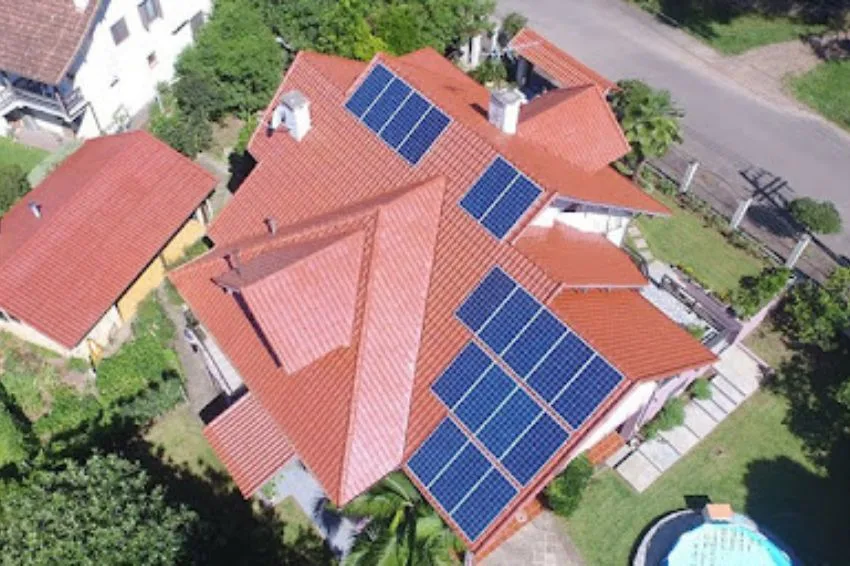
Article published in the 21st edition of the Magazine Canal Solar. Click here and download now for free!
Technological evolution has played a crucial role in the development of photovoltaic inverters, significantly boosting the efficiency and capacity of these devices, providing substantial benefits for the entire sector.
Despite the evolution of the nominal power of products, the distributed minigeneration market has been a challenge for manufacturers of photovoltaic inverters, given requests from distributors that the total power of the set of inverters be exactly equal to the power indicated in the connection budgets.
This approach proves to be challenging, since technological evolution has brought greater diversity to the powers of photovoltaic inverters available on the market, which are not always natural dividers of 0.5 MW, 1 MW or 2.5 MW – the most common powers of mini DG plants. (distributed generation).
Several manufacturers have adopted a power of 330-350 kW for the new generation of photovoltaic inverters, and the fact that this power is not a natural divider of 1000 kW or 500 kW means that the use of this equipment is compromised.

For example: when specifying eight 350 kW inverters (totaling capacity of 2,8 MW) for a photovoltaic plant whose power stated in the connection budget is 2,5 MW, it is likely that on the first attempt there will be a refusal from the distributor. , even if it is proven that the set of inverters will have its maximum output power controlled and reduced so that it does not exceed the agreed 2,5 MW.
What ANEEL say about this practice? Download it now 21nd edition of the Magazine Canal Solar and read it in full.



Comments
Comments are moderated before publication.Comments should be respectful and contribute to a healthy debate. Offensive comments may be removed. The opinions expressed here are those of the authors and do not necessarily reflect the views of the author. Canal Solar.