
Hybrid systems have already become a reality in the photovoltaic energy market. What seemed distant took great strides in its development to meet the demand for energy storage without giving up distributor networks.
Given the recent risks of power outages due to the scarcity of hydroelectric resources, solutions to maintain priority devices that depend on electricity to operate is the main focus of research and where investors' eyes are turned.
Therefore, in the photovoltaic segment, we operate with hybrid systems, which in certain configurations are responsible for supplying energy when the distributor's network is not available.
Mode of operation
As there is still no regulation that allows the injection of energy stored in batteries into the electrical grid, hybrid systems with batteries must work as illustrated in the following figure – that is, just withdrawing energy from the grid, without injecting it, operating as a load from the grid. power grid point of view:
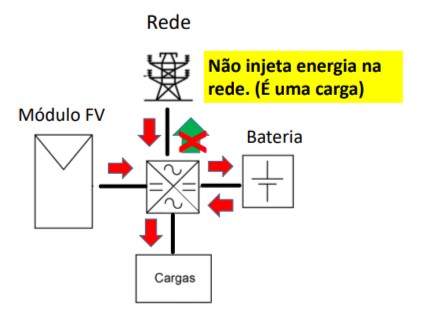
The benefits of the on-grid system are already known, such as the credits generated and the reduction in the distributor's energy consumption, which allows for a cheaper energy bill. However, a major disadvantage of the pure on-grid photovoltaic system is the fact that it must always be connected to the electrical grid, which makes its operation impossible if for some reason the AC grid becomes unavailable.
The impossibility of operating the on-grid system without the electricity grid constitutes a certain waste, as the photovoltaic modules could generate energy during the day and supply at least part of the loads present in the installation.
On the other hand, a purely off-grid system, as it contains a bank of batteries, can operate completely independently of the electrical grid. However, battery banks generally need to be large and have a high cost, depending on the amount of energy to be stored.
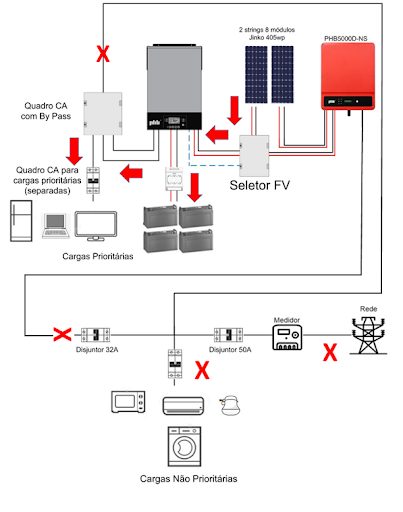
In the retrofit solution, the two types of systems are combined, causing a UPS system to be activated when the electrical grid becomes unavailable, allowing the selective supply of local loads simultaneously with energy from the batteries and photovoltaic modules. This gives the system greater autonomy and extends the useful life of the batteries.
In the case of an absent AC grid, the on-grid inverter's anti-islanding system is activated and disconnects from the grid, causing non-priority loads to be switched off and priority loads to be supplied by the off-grid inverter, using the photovoltaic modules that were previously connected to the on-grid inverter through the PV Selector. The following figure demonstrates how the retrofit solution works when the power grid is absent.
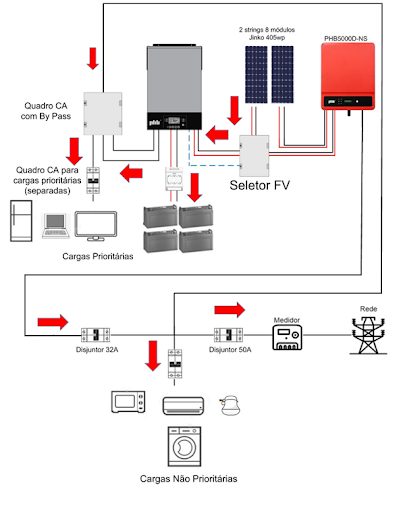
When the AC grid is in operation, the on-grid inverter injects power into the grid and priority and non-priority loads are fed from the grid normally, as in any photovoltaic system connected to the electrical grid.
Through the PV selector, the modules are directed to the on-grid inverter and the battery bank is charged by the distributor's network, as we can see in the figure below:
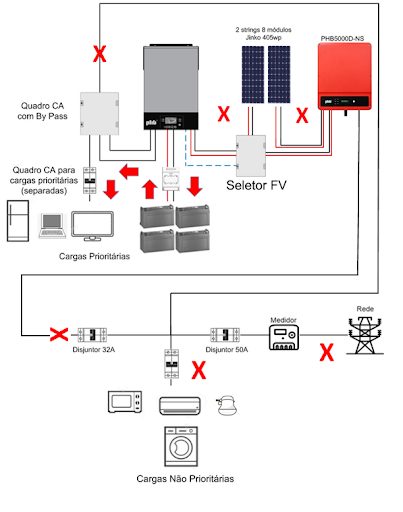
In addition to the two operating modes, there is a third in which the system operates without power from the AC grid and without PV modules, with energy supplied only from batteries.
PV selector
The PV selector acts as a director of the energy generated by the photovoltaic modules. When the AC grid is operational, it directs it to the on-grid inverter. When the AC grid is not available, the energy from the photovoltaic modules is directed to the off-grid inverter, which continues to use the energy from the modules and avoids the “waste” mentioned at the beginning of the article.
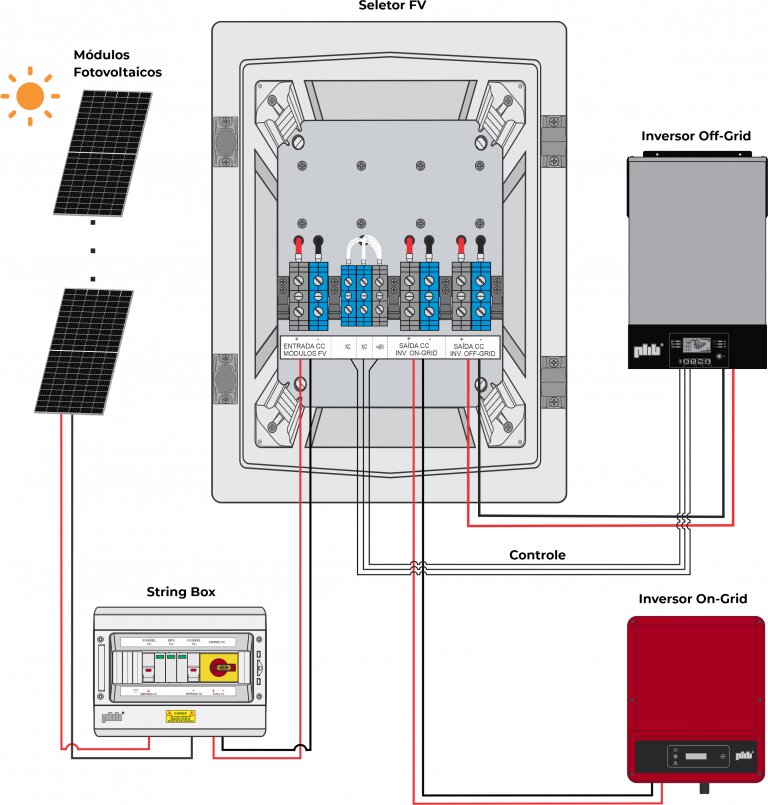
PV selector installation
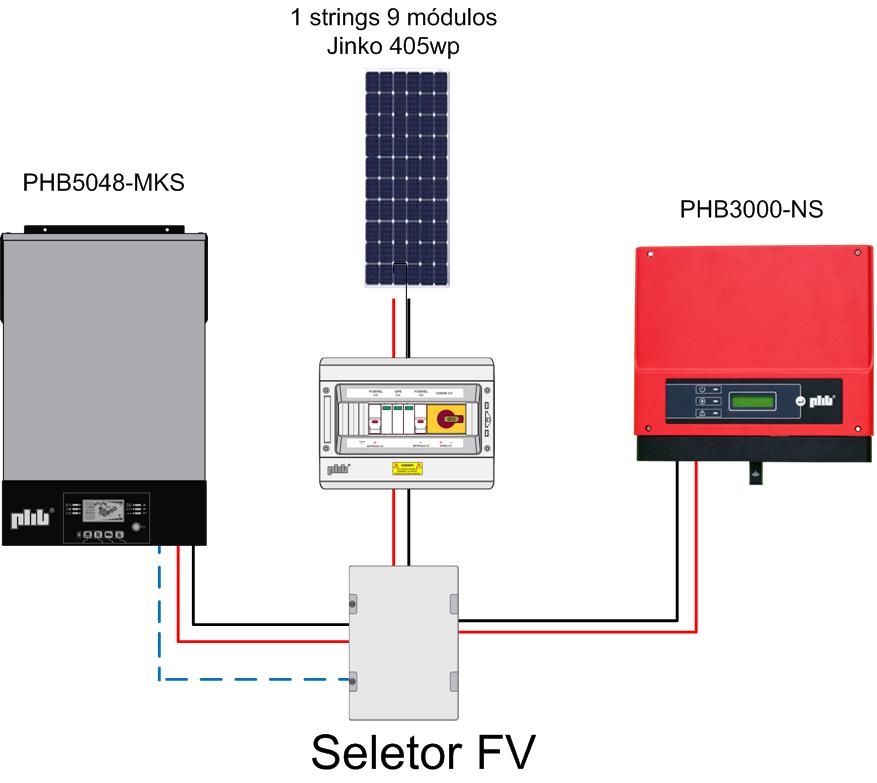
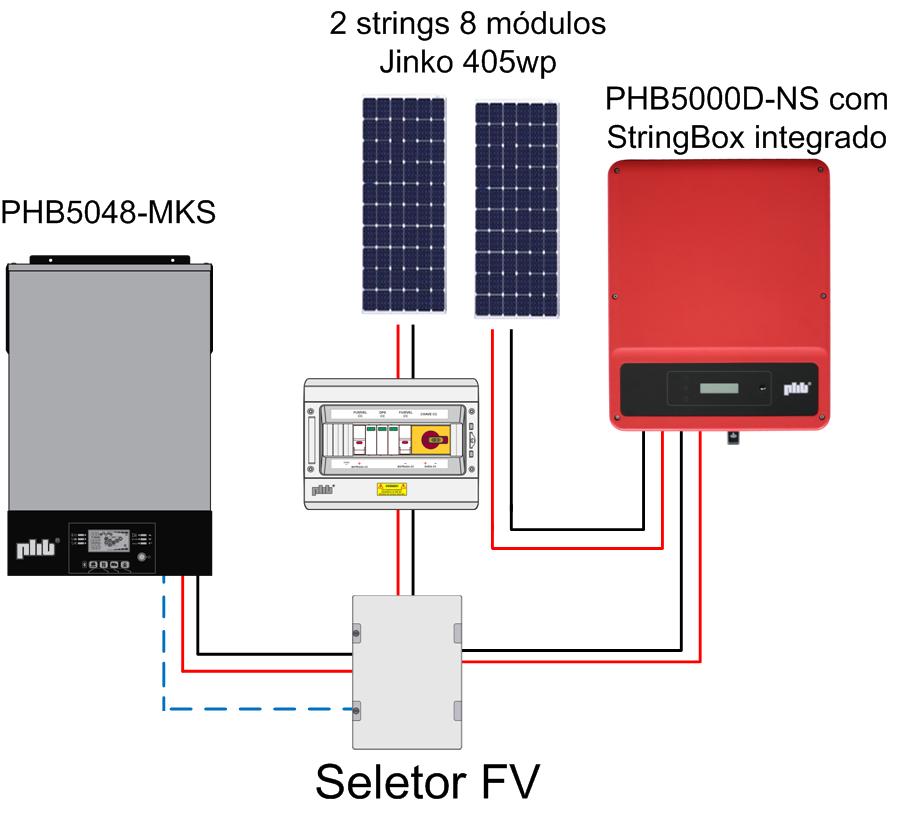
Each selector can only receive one string of photovoltaic modules. The open circuit voltage (Voc) of the string must be less than 500 V. If there is already a stringbox present in the system, the selector must be connected between the stringbox and the inverter, as shown in the following images.
Benefits
The solar UPS solution with retrofit solution becomes a practical resource because it allows an upgrade of an existing photovoltaic system, making the system hybrid and with a backup (UPS) that takes advantage of the generation of the PV modules when the AC grid is inoperative. A system with the UPS can be a little more expensive compared to a system without batteries. However, the benefits that the solution offers both directly and indirectly should be mentioned.
A direct benefit to be mentioned is all the advantages that an on-grid system offers, in addition to the security of not having to stop production or lose products that need to be permanently refrigerated, for example. As an indirect benefit, we have the comfort of being able to use electricity at any time, safely and reliably, without exposure to the risk of blackouts or increases in electricity rates. Learn more about the PHB solution.


Comments (3)
Comments are moderated before publication.Comments should be respectful and contribute to a healthy debate. Offensive comments may be removed. The opinions expressed here are those of the authors and do not necessarily reflect the views of the author. Canal Solar.
Is it possible for me to choose which system I want to work in or not???
Good afternoon Sergio,
If they haven't helped you so far, I can help you.
Contact me, 19 9 9732-2126 or larseletrica@gmail.com
Where can I find a company to retrofit my solar energy system that is currently on-grid?