

When developing technological solutions, engineering systems, or innovative products in the renewable energy sector, ideas often emerge long before their technical or economic viability is proven. This is where the Proof of Concept (or PoC) comes into play. Proof of Concept), a crucial tool for validating hypotheses, reducing risks and guiding strategic decisions.
In this article, we will explore in a technical yet accessible way what a Proof of Concept is, what it is for, in which situations it is applied, its main benefits and the steps that generally make up this process, with a special focus on the solar segment, aiming at the implementation of solutions aiming at technical feasibility.
What is a Proof of Concept (PoC)?
A Proof of Concept (PoC) is a practical, controlled experiment designed to test the technical feasibility of an idea, technology, product, or process. Its primary focus is to answer the following questions: “Is that possible?”
Unlike a complete prototype or a final product, a PoC doesn't necessarily aim for full functional delivery or production scale. It focuses on demonstrating that a concept or principle can work in practice, even if in a limited way or in a test environment.
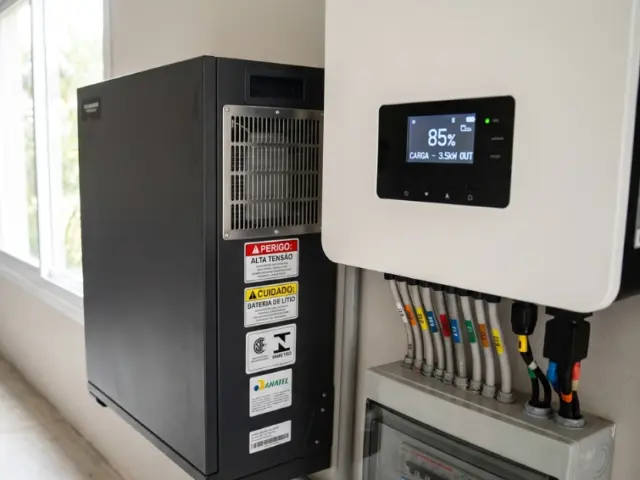
In the energy sector, this might involve, for example, testing whether a new type of photovoltaic inverter can operate and meet the technical specifications of a specific standard, or whether a new battery technology can operate efficiently in environments with extreme temperature variations. This type of testing can demonstrate the product's reliability, which impacts both performance and economic viability.
What is a PoC for?
The main purposes of a PoC are to reduce technical uncertainty before major investments and ensure the reliability of the solution. When developing engineering solutions, doubts often arise about the actual implementation capability of a given idea. The PoC itself helps to:
- Assess whether a technology is technically feasible;
- Detect possible technical or operational limitations;
- Direct development efforts towards promising paths;
- Increase stakeholder and investor confidence;
- Save time and resources by avoiding investments in unviable solutions.
In other words, the PoC is an essential filter that separates what is promising from what is merely theoretical or unfeasible in that context.
In what situations is PoC applied?
Proof of Concepts can be applied in various phases and contexts of technology development. Some examples include:
- Photovoltaic Energy Generation
Imagine a company that wants to invest in a photovoltaic plant and is unsure which inverter to purchase for the project. Before purchasing and installing this product on a large scale, a PoC can be performed to determine which manufacturer offers the highest efficiency product, offering the best performance at the highest operating temperatures.
- Energy Storage
In the case of battery storage systems, a PoC can validate whether a new charge and discharge control system can optimize cell lifespan under different operating conditions, such as peak demand or intermittent generation.
- Control and Automation Systems
Remote monitoring and automation solutions for solar plants often undergo PoCs to ensure that sensors, actuators, and software communicate correctly before field deployment.
- Integrated Projects
In more complex projects involving the integration of diverse sources (such as solar, wind, and batteries), a PoC can validate the energy management system and load balancing in an experimental microgrid.
Benefits of a Proof of Concept
Technical validation
The main benefit is to prove that an idea can be technically executed, even if in a simplified way or on a small scale.
Risk reduction
By anticipating potential failures, incompatibilities, or technical limitations, PoC acts as a risk mitigation tool, both technical and financial.
informed decision making
With the PoC data and results in hand, technical teams and managers can make more confident decisions about whether to continue, adapt, or abandon a given project.
Agility in development
By focusing efforts on validating critical aspects early on, PoC accelerates the development cycle and avoids rework in later phases.
Attractiveness for investors
In sectors such as energy where investments are high, a successful PoC can attract strategic partners and financing, as it demonstrates technical solidity and a better financial return.
What are the common steps or characteristics of a PoC?
While the process may vary by industry or technology, a well-structured PoC typically follows these steps:
- Goal setting
What hypothesis should be tested? What do we want to prove technically? This step defines the scope and success criteria.
- Technical planning
The testing environment, equipment, human resources, tools and methodologies that will be used are defined.
- Execution
The experiment is carried out in a controlled environment, preferably with adequate instrumentation for data collection and validation.
- Data collection and analysis
Data is analyzed according to criteria defined at the beginning of the project. Metrics such as efficiency, stability, performance, and compatibility are evaluated.
- Documentation and reporting
The results are recorded and formalized. A technical report should present the conclusions, limitations, and recommendations for next steps.
- Decision
Based on the results, it is decided whether the idea will be taken forward, improved or discarded.
Conclusion
Proof of Concept (PoC) is an essential tool in the development of technologic solutions, especially in the renewable energy sector, where innovation and reliability go hand in hand. By enabling technical validation of an idea before large-scale implementation, PoC offers a safe, structured, and strategic approach to innovation.
In the current context of energy transition and decarbonization of the energy matrix, agility in developing new technologies must be accompanied by technical responsibility and informed decision-making. In this scenario, PoC consolidates itself as a fundamental pillar in the journey of purposeful innovation.
The opinions and information expressed are the sole responsibility of the author and do not necessarily represent the official position of the author. Canal Solar.




Comments
Comments are moderated before publication.Comments should be respectful and contribute to a healthy debate. Offensive comments may be removed. The opinions expressed here are those of the authors and do not necessarily reflect the views of the author. Canal Solar.