
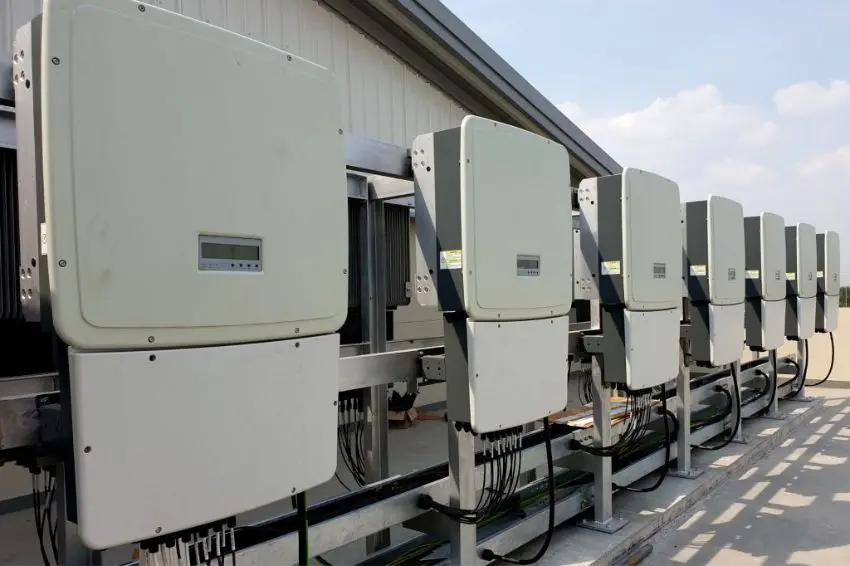
The inverter in a solar power plant classified as Distributed Generation I (GD I) has malfunctioned and needs to be replaced. However, the originally installed model is no longer available, and the equipment found on the market has different characteristics. Could the replacement cause the plant to lose its GD I classification?
This question has gained relevance in the national photovoltaic sector as the aging of the first systems installed in the country makes the replacement of components a real necessity. At the same time, the technology has evolved rapidly and, in many cases, the originally approved model has been discontinued.
The market's main concern involves preserving "acquired rights." Power plants classified as Distributed Generation I (GD I) have much more advantageous energy compensation conditions, guaranteed by Law No. 14.300, which established the Legal Framework for Distributed Generation (GD) in 2022.
This group includes systems that submitted their access requests within the legal timeframe and are therefore guaranteed, until 2045, the maintenance of the previous rules for compensation for network usage.
On the other hand, projects classified as GD II fall under the law's transition rules, with the gradual charging of tariff components, such as Fio B. It is precisely this financial difference that raises the alarm: after all, what happens to the "GD I seal" when the plant needs to replace the inverter?
What does the legislation say?
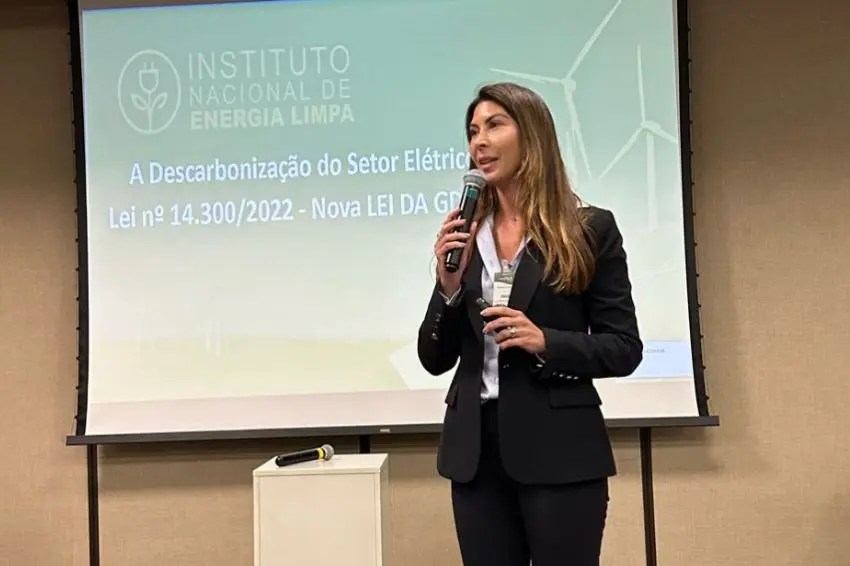
According to Marina Meyer Falcão, president of the Energy Commission of the OAB (Brazilian Bar Association) in Minas Gerais and a lawyer specializing in Energy Regulatory Law, simply replacing the inverter does not automatically mean the plant loses its classification as a Distributed Generation I plant.
“Replacing the equipment doesn't automatically mean losing the benefit. The key point is to verify whether the replacement maintains the same installed (approved) power or if there will be an increase in generation power,” he clarifies.
The lawyer even reveals that she recently discussed the matter in a meeting with representatives of... ANEEL (National Electric Energy Agency) and Neoenergia, in Brasília (DF).
She recounts that, at the time, Carlos Alberto Mattar, superintendent of Regulation of STD (Electricity Transmission and Distribution Services) of ANEELHe explained that the technological evolution of inverters needs to be considered in the regulation of replacements, provided that the equipment change does not result in an increase in the plant's power output.
According to Marina, the understanding discussed at the meeting is that replacing the inverter with a newer technology should not be confused with expanding the plant. The focus of the inspection should be on the variation in installed capacity. "If I replace the inverter today with one using new technology that didn't exist two years ago, it will naturally not be identical to the old model," Marina points out.
What if the swap increases the plant's power output?
In this scenario, the regulatory situation changes completely. Law 14.300 established the transition regime for MMGD (Micro and Mini Distributed Generation), while REN 1.000/2021... ANEELThe regulation, amended by REN 1.059/2023, dictates the rules for cases of capacity expansion. "If the inverter replacement means an increase in the plant's power output, there will be a reclassification to Distributed Generation II," Marina warned.
In summary, the rule of thumb works like this:
- Replacing the inverter without increasing power: In principle, there is no legal or regulatory reason for the loss of GD I classification.
- Replacing the inverter and increasing the installed power: This requires technical analysis and prior approval of the change from the energy distributor, as the additional power portion may be reclassified under the rules of Distributed Generation II or Distributed Generation III.
For this reason, Marina emphasizes that you should never increase power on your own, given the risk of impacts on the classification and billing of compensated energy. "As a lawyer, my recommendation is: before changing the inverter, compare the currently approved power with that of the new equipment and analyze the regulatory impact of the replacement," she said.
According to Marina, a simple physical alteration to a distributed generation (DG) system can cause significant economic damage if it is interpreted as an increase in power. "Therefore, every replacement project must be analyzed prior to its execution," the professional emphasized.
all the content of Canal Solar is protected by copyright law, and partial or total reproduction of this site in any medium is expressly prohibited. If you are interested in collaborating or reusing part of our material, please contact us by email: redacao@canalsolar.com.br.




Comments (2)
Comments are moderated before publication.Comments should be respectful and contribute to a healthy debate. Offensive comments may be removed. The opinions expressed here are those of the authors and do not necessarily reflect the views of the author. Canal Solar.
But by replacing the damaged or obsolete inverter(s) without altering the string or module power, how will the distributed generation power increase? If I have 20 600W modules connected to the first MPPT input of the inverter in a string, and I connect the same string with the same power and number of modules to the inverter that will replace the damaged one, how will that power increase?
With technological advancements, it's not just the inverters that have changed; photovoltaic modules are now more powerful. Does increasing power through module upgrades or reducing the number of modules, even if different from the original design, also result in non-compliance?