
With the collaboration of Ênio Fonseca*
One of the public concession is the contract between the public administration and a private company, by which the execution of a public service (distribution of electricity, for example) is transferred to the private sector, so that it can be carried out in its own name and at its own risk, at a rate paid by the user (consumer).
According to article 175 of the 1988 Federal Constitution and other complementary laws, “It is the responsibility of the Public Authorities, in accordance with the law, directly or under a concession or permission regime, always through bidding, to provide public services”.
According to Law No. 8.987/95, which “Provides for the concession and permission regime for the provision of public services provided for in Article 175 of the Federal Constitution”, we have in its Article 6: “Every concession or permission presupposes the provision of a service adequate to fully meet the needs of users, as established in this Law, in the relevant standards and in the respective contract”.
“1st: Adequate service is one that meets the conditions of regularity, continuity, efficiency, safety, timeliness, generality, courtesy in its provision and reasonable rates”. Reasonable rates are a desired objective, but never achieved, something like a mirage considering the taxes, subsidies and rate incentives – in other words, the surprising rule: pay two and get one (“of every R$100 that the Brazilian consumer pays on his/her electricity bill, R$46 is used to cover 11 charges of the electricity sector and eight federal, state and municipal taxes” – PwC).
2nd: “The present day includes the modernity of techniques, equipment and facilities and their conservation, as well as the improvement and expansion of the service”.
However, it is not enough to be “cheap (efficient) and functional”, it has to be up to date with “modern techniques, equipment and facilities”.
The term of concession contracts cannot be less than 5 or more than 35 years. In 35 years we will have 9 presidents (at least 5 if we consider the possibility of reelection); the same goes for governors and mayors, 9 Legislatures (term of office of each elected assembly) in the National Congress, in the State Legislative Assemblies and Municipal Chambers.
In the meantime, we may have liberal, statist, progressive and anti-entrepreneurial biases, not necessarily in that order. The possibility of a concession contract ending as it began is very low, or almost none.
According to the IBPT (Brazilian Institute of Planning and Taxation), since the 1988 constitution, “more than 6,4 million rules have been issued. On average, 800 rules are issued per business day. In tax matters, 419.387 rules have been issued. That’s more than 2,17 tax rules per hour. That’s 46 new tax rules every business day.”
Our environmental legislation, estimated at 60 thousand environmental standards (including normative acts of the Union, Brazilian States and Municipalities, as well as technical standardization bodies) also has an impressive pace of innovations and updates.
With this dynamic and complex nature, even the best corporations may not achieve full/complete compliance (complying with legal and regulatory standards, as well as preventing, detecting and dealing with any potential deviations or non-conformities that may occur). You go to bed legal and may wake up illegal due to the latest regulatory innovation.
In the main public concession contracts (airports, highways and in the energy sector) there is a “regulatory frenzy:
- It gives rise to numerous opportunities for discretion by the Public Agent, allowing, in many cases, interpretation of paragraphs and requirements, at the discretion of the supervisory agent;
- It may present several clauses, items in legal disagreement with current legislation and/or legal uncertainty regarding privatization, collection of fines, compensation procedures, employees, application of the Corporation Law, etc.;
- Concession contracts specify unusual and incomplete factors supplemented by imprecise equations. Failure to comply with these items (which are random and discretionary) implies the possibility of fines, with questionable criteria that may be subject to legal action, as well as the possibility of variable interpretations by the public supervisory agent who will apply the sanctions and their respective personal discretion;
- Increasing and permanent judicialization throughout the term of concession contracts due to abusive clauses, excessive discretion and subjectivity;
- Abuse of social control that undermines the business function of a closed SA (the concessionaire).
The above list is not exhaustive, but merely illustrative. For the reasons listed above, legal uncertainty may make it impossible to make investments that will be necessary over time to meet the concession objectives.
It compromises full compliance with, among others, the principles of legality, purpose, motivation, reasonableness, proportionality, morality, legal certainty, public interest and efficiency.
Blackout in SP: one third of affected consumers remain without power
About the electric power sector in Brazil (SEB)
The electric power sector is considered, according to our Brazilian Constitution, to be of public utility, observing the following points:
- The public utility sector is made up of activities that provide basic services to the population, such as electricity, natural gas and water supply;
- The distribution of electricity is a public service under the jurisdiction of the Union, provided by concessionaires and licensees.
In this wake, the ANEEL (National Electric Energy Agency) is responsible for regulating, at the government level, the Brazilian Electric Sector, with the support of complementary agencies (CMSE, EPE, ONS and MME). And, the division of this sector occurs in four main management blocks:
Generation
The Brazilian electricity sector is predominantly hydroelectric. However, there are several energy sources that meet the needs and can be used, such as wind, thermal or solar energy, biomass, and biofuels.
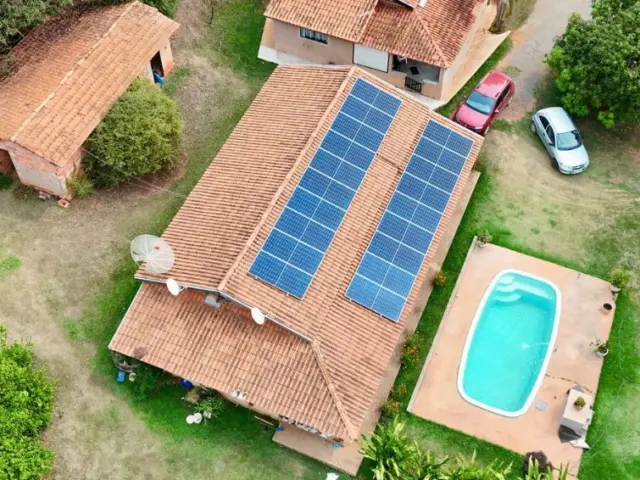
Generation can also be centralized or distributed. In the first case, energy is produced by larger plants and transmitted and distributed to end consumers by other transmission and distribution networks. In the second case, energy is produced at or near the consumption center.
Transmission
The function of transmission is to take the electrical energy generated in power plants to distribution companies, or eventually to large consumers. The energy transmission system in Brazil consists of an interconnection of lines that spread throughout the national territory, called SIN (National Interconnected System).
In addition to energy transmission, the SIN guarantees grid stability and energy integration with neighboring countries.
Distribution
And finally we have the distribution sector, in which companies are responsible for receiving high voltage energy and reducing it to a commercial level for the end consumer.
Whether it is a primary electrical network, which are medium voltage networks that serve medium and large companies and industries, or secondary, which are low voltage networks that serve small residential, commercial and industrial consumers.
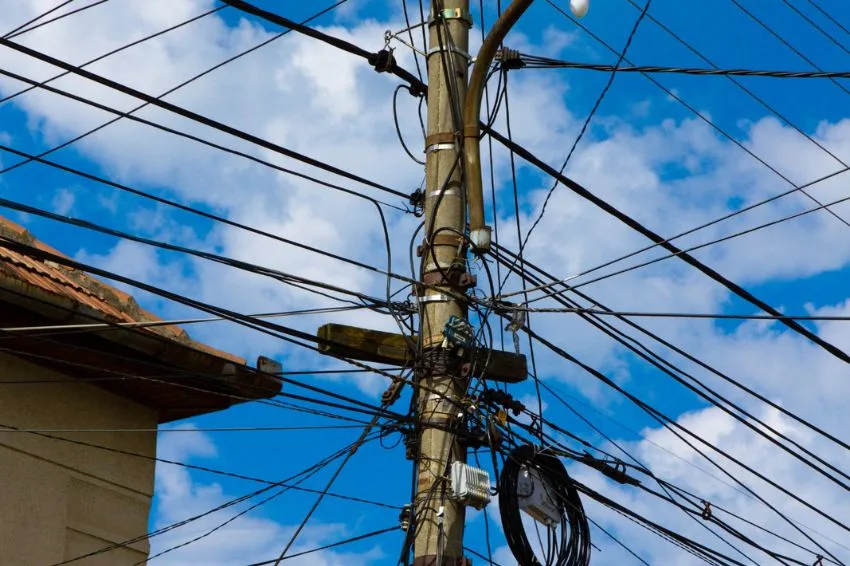
Distribution is carried out through conducting wires, transformers, posts or underground ducts.
Commercialization
A ANEEL It is responsible for regulating and monitoring the electricity system as a whole, in addition to defining energy rates for captive consumers – those who are only allowed to purchase energy from the distributor holding the concession or permission in the area where the consumer is located – in accordance with the guidelines established for the sector by the federal government and what is established by law and in concession contracts.
Electricity is a consumer good whose importance has been growing rapidly over the last few decades, due to its role as a basic input in industrial production processes as well as in the service provision and trade sector in general, agriculture, in the energy transition, in the quality of life and in the improvement of the HDI, in addition to the comfort it provides to the nation's homes.
ANEEL ends collection of quotas for Covid and Water Shortage accounts
About the renewal of electricity distribution contracts in Brazil
The renewal of electricity distribution contracts in Brazil, currently regulated by Decree No. 12.068/2024, regulates the bidding and extension of electricity distribution concessions and establishes guidelines for the modernization of public electricity distribution service concessions.
The decree also determines that the ANEEL will be responsible for preparing the addendum that will define the concession criteria, focusing on the efficiency of the services provided and the economic and financial management of the contracts.
The decree establishes guidelines for the modernization of concessions and the extension of contracts for 20 electricity distributors, expiring between 2025 and 2031.
The new rules aim to improve the quality and efficiency of services provided to consumers, and include:
- Strict targets for service recovery after extreme weather events;
- Limitation on the distribution of dividends in case of non-compliance with the requirements;
- Introduction of consumer satisfaction indicators as performance metrics;
- Annual proof of the distributor's financial health;
- Maintaining service quality across all concession areas.
After all, the electricity sector is no longer the same as it was 30 years ago!
As distributors have a natural monopoly on energy distribution and, therefore, the government grants each company the right to explore a specific area, this renewal: nineteen contracts (signed in the 1990s) already have concessions expiring between 2025 and 2031.
These companies today, together, represent 62% of the country's energy distribution market, with combined revenues exceeding R$168 billion.
The most affected states are Espírito Santo, Rio de Janeiro, Bahia, São Paulo, Rio Grande do Sul, Mato Grosso do Sul, Mato Grosso, Sergipe, Rio Grande do Norte, Ceará, Pará, Pernambuco, Paraíba and Maranhão, as shown in the table below:
Another extremely important point highlighted in Decree 12.068/2024 is the level of consumer satisfaction – which will become a crucial indicator in the evaluation of distributors – which is a spectacular advance in favor of the electricity consumer, as the Minister of MME (Mines and Energy) rightly pointed out.
“It is an opportunity to effectively improve the energy delivered to homes, businesses and rural areas. 56 million consumer units are impacted. The new contracts will be more modern and companies must guarantee the real capacity to provide the service. Quality will be effectively measured by the service provided to the consumer. Prolonged outages and long waits in call document centers will no longer be tolerated by the population.” says the Minister of Mines and Energy, Alexandre Silveira, at a press conference held in Brasília on June 20.
From the perspective of the new regulations, distributors will also be required to deliver certain services, such as:
- Deliver the same level of quality to all neighborhoods;
- Prove financial health annually;
- Improve service channels;
- Create a specific channel for municipal and state public authorities;
- Invest in strengthening networks in rural areas;
- Digitize networks and services, among others.
The contracts will have two hypotheses for the expiration of the concession:
- Failure to comply with service continuity limits, individually or in combination, for three consecutive years;
- Failure to comply with economic and financial management efficiency criteria for two consecutive years.
The new guidelines established by Decree No. 12.068/2024 represent a significant milestone for the electricity distribution sector in Brazil, as through the renewal of concession contracts, where the government will seek not only to guarantee the continuity of service, but also to promote substantial improvements in the quality and efficiency of service to consumers, this new milestone sees the energy consumer with more dignity!
The changes also bring considerable challenges for distributors, who will have to increase their investments and improve their processes to meet the new requirements.
The introduction of consumer satisfaction indicators as performance metrics, the limitation on dividend distribution in case of non-compliance with requirements and the imposition of strict targets for service recovery after extreme weather events are measures that aim to put the consumer at the center of attention. These actions can, in the long term, result in a more reliable and efficient service for Brazilians.
Thus, with the approval of these new rules, it is expected that the sector will evolve to meet the demands of the population in a more effective and transparent manner, guaranteeing better quality energy for all Brazilians.
Through this commitment, and as established in art. 4 of the aforementioned Decree, the ANEEL opened space to debate the matter, through a public consultation, and on October 9, 2024 it published the draft of the new addendum to the Concession Contracts – with the purpose of complying with the conditions provided for in Decree 12.068 (which must have this Contractual Addendum approved by October 19, 2024).
§1 of art. 10 of Decree 12.068/2024 states that the draft amendment to the concession contract must be approved and published by ANEEL within 120 (one hundred and twenty) days of the publication of the Decree, that is, October 19, 2024.
Several topics will be covered in the addendum – in accordance with the guidelines established in the Decree – in relation to the provision of distribution services, including: operation, expansion and enlargement of the system; sharing of infrastructure; quality of information from distributors; effectiveness of the SAC and resolution of complaints. Regarding the energy transition, the application of research, development and innovation in the electricity sector in energy efficiency programs will be discussed.
Improvements in economic conditions; tariff affordability; efficient management; economic and financial sustainability; governance, competition; risk allocation; among other matters will also be regulated.
With this system, the prediction of ANEEL The approval of the draft Amendment Term is expected in the first quarter of 2025.
The first concessions to expire are: EDP Espírito Santo Distribuição de Energia, Light Serviços de Eletricidade and Ampla Energia e Serviços – Enel Rio, with final terms on July 17, 2025, June 4, 2026 and December 9, 2026, respectively.
The preparation of the Technical Note involved the collaboration of several superintendencies, and a series of internal meetings were held with agents from both the distribution and consumption segments in order to stimulate debate about the process. There are 19 distribution concessionaires with contracts expiring between 2025 and 2031.
The concessions may be extended for 30 years, provided that the distributors commit to meeting the quality and efficiency targets in economic and financial management and the new contracts will have the IPCA as an index for annual tariff adjustments.
The quality of services will be measured by indicators of frequency and average duration of service interruptions, while management efficiency will be assessed based on indicators that measure the concessionaire's ability to meet its economic and financial commitments in a sustainable manner.
The indicators will be defined individually by ANEEL. The assessment period will be the five years prior to the extension of the concession, excluding the years prior to 2021 for the criterion of efficiency of economic and financial management.
It will be considered non-compliance with the provision of the service if the supply quality criteria are not met for three consecutive years or the management criteria for two consecutive years.
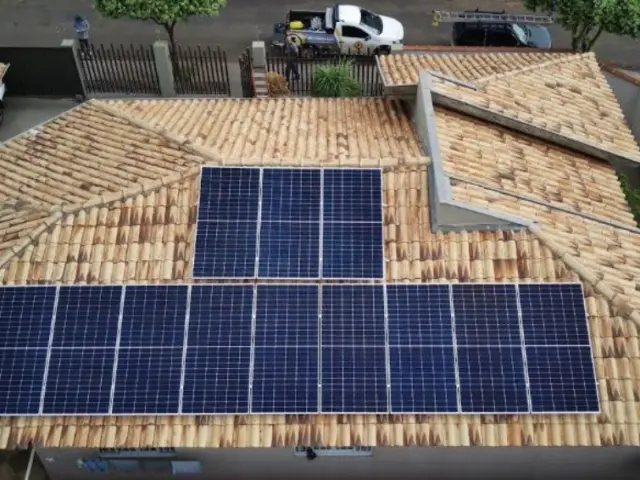
For the distributed generation segment, the new concession contract will contain a guideline for distributors to make available on their websites all the information necessary to facilitate the connection processes for micro and mini-generation users.
Currently, the distributed generation segment faces difficulties in connecting its systems because distributors argue that there is an extrapolation of operational parameters of the electrical networks, a problem that has become known as flow inversion.
Consumer satisfaction, measured through service indicators and opinion surveys, will become a criterion for evaluating service quality.
Distributors will be required to deliver the same level of quality in all neighborhoods within their concession area. Efficiency targets will be established for restoring service after extreme weather events, such as the one that occurred in São Paulo in November 2023.
Distributors may engage in other business activities and offer new services to users, at their own risk, as long as they promote affordable rates. New incentives will also be established for concessionaires to invest in combating energy losses and defaults. ANEEL may establish different rates to deal with these problems.
Another innovation, in conjunction with the ANPD (National Data Protection Authority), provides that ANEEL may establish criteria for sharing consumer data, “with broad and equal access to interested parties, to the benefit of competition and respecting data protection rights”.
The data held by the concessionaire must be used strictly within the scope of distribution activities. Recently, the media reported an alleged use of consumer data between companies in the same economic group in order to gain an advantage in attracting new customers to the Free Energy Market.
Distributors will also have to standardize technical qualification processes between their own and outsourced employees and will have to gradually encourage the digitalization of networks and services, including the replacement of energy meters, in accordance with MME criteria.
One of the most controversial points was the distribution limit of 25% (legal minimum) of dividends and interest on equity in the event of non-compliance with technical, commercial and economic-financial quality indicators.
In line with the protection of energy consumers and in favor of transparency, distributors must establish a communication channel dedicated to serving public bodies at municipal, district and state levels and make available on energy bills the compensation amounts due to violation of service continuity indicators.
In the event of non-compliance with the service continuity limits, individually or jointly, for three consecutive years, or in the event of non-compliance with the economic-financial management efficiency criteria for two consecutive years, the NEW CONTRACTUAL DRAFT must contain the hypothesis of opening the concession expiration process – which is a legal security in favor of the consumer.
A ANEEL It may also define more restrictive criteria with the aim of enabling concessionaires to provide a service compatible with the “technological, regulatory and commercial reality of the electricity sector throughout the term of the concession contract.”
In this case, the application of these new criteria must be preceded by a public consultation. And the concessionaires must also develop actions to increase the resilience of the electricity grids in the face of climate events, as well as strengthen service in rural areas, “especially in regions with potential for agribusiness and family farming.”
How to adhere to the new contracts? Dealers must register with the ANEEL the request for extension of the concession at least 36 months in advance. Those who have already sent the request will have the opportunity to ratify it within 30 days, counting from the publication of the concession draft.
A ANEEL must also forward the recommendation to the MME regarding the extension at least 21 months in advance. This criterion may be relaxed for concessions expiring between 2025 and 2026. Finally, the MME's decision regarding the extension or bidding must be published 18 months before the advent of the contractual term.
It is indisputable, in the understanding of the authors, that with the renewal of the concession contracts, the government seeks not only to guarantee the continuity of the service, but also to promote substantial improvements in the quality and efficiency of service to energy consumers in every corner of the country – from Oiapoque to Chuí – that is, each class of energy consumer must have the guarantee of rights and clearer contractual rules, innovative and more technological processes, but always towards a more accessible, economical and environmentally responsible energy future.
It is therefore imperative that regulators and stakeholders continue to collaborate to enhance and expand this innovative and game-changing approach!
* Enio Fonseca: Forest Engineer and Senior Advisor on socio-environmental issues, with specializations in Forest Protection (NARTC and CONAF-Chile), Environmental Engineering (IETEC-MG), Leadership in Management (FDC), Environmental Education (UNB) and MBAs in Forest Management (IBAPE) and Business Management (FGV). He was President and is a Board Member of the Electric Sector Environmental Forum (FMASE), in addition to having served as Superintendent of IBAMA-MG and of Environmental Management of the Cemig Group. He is CEO of PACK OF WOLVES and an active member of institutions such as OAB-MG, FIEMG, Ibrades and CEMA. He is also a columnist for the portal direitoambiental.com.
The opinions and information expressed are the sole responsibility of the author and do not necessarily represent the official position of the author. Canal Solar.


Comments (3)
Comments are moderated before publication.Comments should be respectful and contribute to a healthy debate. Offensive comments may be removed. The opinions expressed here are those of the authors and do not necessarily reflect the views of the author. Canal Solar.
When there is no competition, the comfort line prevails. Why can't this concession be the same as that of an Internet provider?
They should open an inspection process (audit) on the amount charged for COSIP in many municipalities in Brazil, there is something wrong, very wrong...
The way COSIP is operated is determined by municipal law. The distributor only collects and transfers the waste in accordance with the law of that locality. Therefore, regarding public lighting, we must demand that our councilors and mayors correct any point that is of interest.