
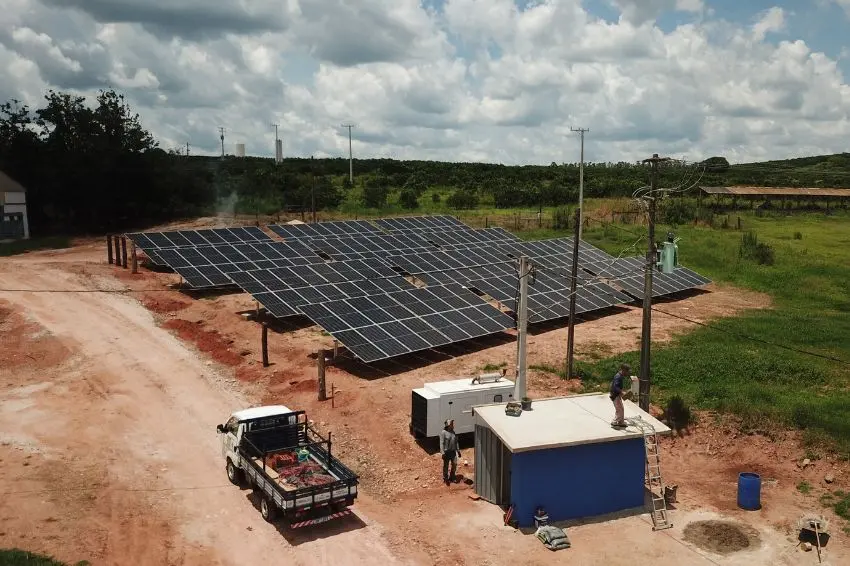
The discussion regarding the creation of the ERAG (Regional Generation Relief Scheme), announced by the ONS (National System Operator) as a safety mechanism for exceptional situations of excess generation, deserves to be treated with serious technical, legal, and regulatory considerations.
The growth of distributed generation (DG), especially from solar photovoltaic sources, effectively creates new challenges for the operation of the National Interconnected System (SIN). However, it is crucial to separate two distinct issues: one is the need to modernize the operation of the electrical system; another, completely different, is treating DG as the cause of the problem.
Distributed generation (DG) did not emerge on the fringes of Brazilian energy policy. It was expressly incorporated into the national legal system and received its own legal framework with Law No. 14.300/2022, the result of years of regulatory and legislative development. The expansion of DG must be accompanied by modernization of the grid, storage, and operational intelligence—not by indiscriminate restrictions.
Therefore, any need for new control mechanisms must be compatible with the rights guaranteed to agents and consumers by Brazilian legislation.
Distributed Generation represents a structural change in the traditional model of the electricity sector, and today it represents a public energy policy since DG introduced a different logic to the Brazilian electricity sector, which is the generation of energy close to where the energy is consumed.
This decentralization can reduce losses, stimulate private investment, democratize access to renewable energy generation, increase energy security, and allow consumers to actively participate in the energy transition.
For decades, the Brazilian system was predominantly organized around large, centralized projects, with generation located far from consumption centers and transmission of large blocks of energy.
On the other hand, the growth of distributed generation (DG) is aligned with constitutional principles related to sustainable development, free enterprise, consumer protection, the social function of economic activity, and the pursuit of an efficient and environmentally responsible energy system.
Law No. 14.300/2022 established the Legal Framework for Distributed Microgeneration and Minigeneration and consolidated rights, duties, and rules for the development of distributed generation. One of the law's great merits was precisely to provide legal certainty to investments made in a sector characterized by high initial investment and long-term returns.
The legislator recognized that abrupt changes to the rules could jeopardize investments already made and, therefore, established transitional regimes and specific rights for certain projects. This aspect is fundamental!
The expansion of distributed generation (DG) cannot be analyzed solely from the operational perspective of the system. It is also necessary to consider: the investments made; the acquired rights; the contracts entered into; the transition rules; legal certainty; the protection of legitimate expectations; and regulatory stability.
Law No. 14.300/2022, therefore, cannot be interpreted in isolation from the Federal Constitution and the principles governing Public Administration and economic activity. Any new policy for controlling generation must observe constitutional limits.
Article 5, XXXVI, of the Federal Constitution protects acquired rights, the perfect legal act, and res judicata. Article 5, LIV and LV, in turn, ensures due process of law, the right to a fair hearing, and the right to a full defense.
Article 37 establishes the principles that should guide Public Administration, including legality, impartiality, morality, transparency, and efficiency.
In the economic sphere, Articles 170 et seq. of the Constitution establish the foundations and principles of the economic order, including free enterprise and the valorization of labor, as well as consumer protection and environmental protection. Article 225 also establishes the duty to protect the environment for present and future generations.
Thus, modernizing the operation of the electrical system is constitutionally legitimate and necessary. But it is also constitutionally necessary that this modernization be carried out with proportionality, transparency, predictability, and legal certainty.
The diagnosis presented by the ONS itself is important: the accelerated growth of distributed generation increases the need to monitor and control the system. This diagnosis does not mean that distributed generation should be reduced. It means that the electrical system needs to evolve.
Brazil is entering a new phase in the electricity sector, characterized by: distributed generation + storage + artificial intelligence + digitalization + smart grids + active demand management + electric vehicles + demand response.
It is unreasonable to imagine that a 21st-century system will continue to operate exclusively with tools developed for a predominantly centralized system. The correct question, therefore, should not be: “How to cut off distributed generation?” but: “How to transform distributed generation into an operational resource of the electrical system?”
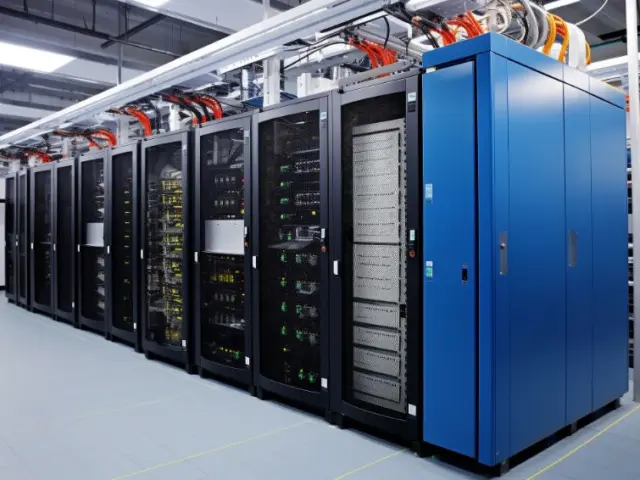
This is where a fundamental technology emerges: BESS (Battery Energy Storage Systems), especially systems installed behind-the-meter, that is, behind the consumer's meter. The logic is simple. During periods of high solar production and low demand, the energy that would eventually be injected into the grid can be directed to charging the batteries.
Subsequently, this energy can be used by the consumer during peak demand times. This reduces the need to export energy to the grid precisely during critical periods. In other words, the battery will transform potentially surplus generation into stored energy.
Another relevant feature is the so-called zero grid, zero export, or zero injection. In this model, control systems continuously monitor the energy flow at the connection point. When solar generation exceeds instantaneous consumption, the system can: increase battery charging; reduce inverter power; direct energy to internal loads; limit or prevent energy export to the grid.
The result is extremely relevant: distributed generation would then function as a controllable resource behind the meter, and not simply as an intermittent source injecting energy into the grid. Therefore, batteries and zero-injection systems can represent an important part of the solution to the challenges identified by the ONS (National System Operator).
From "distributed generation as a problem" to "distributed generation as a resource"
Brazil needs to change its regulatory logic. Instead of viewing the approximately tens of gigawatts of distributed generation as an operational problem, we should see this installed capacity as a gigantic energy infrastructure distributed throughout the national territory.
With the right technology, these assets can contribute to: reducing peak demand; energy storage; reducing exports during peak hours; demand response; grid stability; greater resilience; loss reduction; surplus management; provision of ancillary services, as regulated; greater operational flexibility.
What may seem like a lack of controllability today can be transformed into systemic flexibility. If ERAG is effectively implemented, it is essential that it be conceived as an exceptional safety mechanism. and not as a standard tool for managing Distributed Generation.
The very concept presented by the ONS indicates a logic of last line of defense: only after the use of other system management measures. This exceptional character must be preserved, and any automatic mechanism for shutting down or reducing generation must have, among other requirements:
- Objective criteria;
- Predefined hypotheses;
- Proportionality;
- Selectivity;
- Transparency;
- Governance;
- Traceability of commands;
- Cyber security;
- Clear definition of responsibilities;
- Rules for communicating with agents;
- Monitoring mechanisms;
- Assessment of economic impacts;
- Appropriate regulatory treatment for any eventual curtailment.
An emergency solution cannot be transformed into a new form of permanent restriction on distributed generation (DG). And, if there is a mandatory reduction in the generation of DG projects, a central legal question arises: who would bear the economic cost of this restriction? This discussion cannot be ignored.
Investors made investments based on a specific regulatory framework. There are financing agreements, contracts, leases, insurance policies, obligations to suppliers, and legitimate expectations of revenue generation. If generation restrictions become frequent or structural, their economic effects need to be properly assessed. Simply determining a shutdown from a technical standpoint is not enough.
It is necessary to establish: criteria + legal basis + governance + transparency + accountability + potential economic treatment. Brazil has an extraordinary advantage. It has one of the most renewable electricity matrices in the world and enormous potential in solar, wind, hydroelectric, and biomass energy. Distributed generation is part of this transformation..
The current challenge is precisely to ensure that the growth of renewable energy generation is accompanied by the growth of the infrastructure needed to manage it. This means investing in: smart grids, storage, digitalization, automation, transmission, distribution, smart metering, demand management, and new flexibility markets.
The solution cannot simply be to prevent renewable generation from continuing to grow, and the debate on ERAG should be used to build a more modern regulatory agenda. It is necessary to discuss the integration between:
- Distributed Generation vs. Production close to the consumer;
- Storage vs. Batteries as a tool for flexibility;
- Grid Zero x Export control at the connection point;
- Smart Grids vs. Intelligent Networks and Greater Observability;
- Demand response vs. consumers actively participating in the operation of the system;
- Digitization vs. Real-time data for decision making;
- Flexibility Market vs. Compensation for resources capable of contributing to the system's equilibrium.
This is the natural evolution of the electricity sector. Distributed generation (DG) can be part of the solution to the "energy surplus." A paradigm shift is needed.
If there is excess solar energy during a given period, there are several alternatives before simply shutting down generation: storage → shifting consumption → controlling export → using flexible loads → integrating distributed resources → reducing centralized generation → and only as a last resort carrying out emergency shutdowns.
The battery behind the meter is particularly interesting because it operates precisely at the point where production and consumption occur. And the zero-injection system allows the distributed generation (DG) to be configured so as not to export surplus energy to the grid.
Therefore, distributed generation (DG) + BESS + intelligent inverter control + zero export can constitute an architecture capable of significantly reducing pressure on the grid during critical moments. The growth of distributed generation has brought real challenges to the Brazilian electrical system.
To deny them would be a mistake. But it would also be a mistake to turn these challenges into an argument for indiscriminately limiting an energy policy that has a legal and constitutional basis.
Law No. 14.300/2022 established a legal framework for distributed generation (DG). The Constitution protects legal certainty, due process, free enterprise, consumer protection, economic development, and environmental protection.
The path forward, therefore, must be one of modernizing the system, not regulatory regression. Brazil needs to leverage its approximately 50 GW of micro and mini-distributed generation as a vast decentralized energy infrastructure.
With batteries behind the meter, zero-injection systems, smart grids, digitalization, demand response, and proper coordination between the National System Operator (ONS), distributors, and distributed resources, what today represents an operational challenge could become one of the greatest opportunities for modernizing the Brazilian Electric System.
Distributed generation should not be seen as a threat to energy security. It should be integrated into energy security. The debate about ERAG, therefore, should not be solely about how to shut down generation.
It should be about how to make millions of distributed generation units a smart, flexible, storable, and controllable part of the Brazilian Electrical System. THE FUTURE IS NOT LESS DISTRIBUTED GENERATION. IT'S SMARTER DISTRIBUTED GENERATION!
The opinions and information expressed are the sole responsibility of the author and do not necessarily represent the official position of the author. Canal Solar.


Comments (1)
Comments are moderated before publication.Comments should be respectful and contribute to a healthy debate. Offensive comments may be removed. The opinions expressed here are those of the authors and do not necessarily reflect the views of the author. Canal Solar.
The funny thing is that there were incentives and more incentives for solar energy, and now they want to consider banning it? I hope they have plenty of money in the bank for the compensations!