

The concept of energy storage is broad and energy can be stored in a variety of ways. A diesel oil tank, a coal storage tank and the reservoir of a hydroelectric plant are some examples of how energy can be stored. Among the storage possibilities, one in particular is currently attracting a lot of attention: batteries. This is because battery storage systems are highly flexible and can be applied to everything from residential systems to large generation parks.
But, after all, why do humans need to store energy?
This has to do with the freedom to consume energy whenever desired. No one wants to be deprived of turning on a light or a television because there are no energy resources available at that exact moment. With an increasingly technological and digital society, the availability of electricity plays a leading role in terms of sustainability, productivity, profitability and quality of life, to name a few.
In general, there is a growing global movement towards empowerment, freedom and decentralization, demands that drive the storage market. In this context, we discuss in this article how storage solutions solar energy combined with storage can find viability today.
Possible and potentially viable applications in Brazil
Agriculture
Agribusiness is the great locomotive of the Brazilian economy. Most farmers are already used to investing in technology. Harvesters and planters synchronized and operated with GPS, increasingly intelligent machines, are some of the examples that show that farmers invest in technologies that add value and increase productivity.
It's no different with solar energy: Many producers are already investing in photovoltaic panels to boost their business. The application of storage systems can generate even more benefits for agribusiness.
For example, one of the biggest bottlenecks in rural areas, especially for grain producers (soybean, corn, beans, etc.) is rain. A lack of rain can cause losses in productivity or even wipe out an entire harvest. One opportunity to generate value for producers is the use of off-grid solar systems (isolated) with batteries to, for example, power irrigation pivots.

There are cases, already reported in the Canal Solar, from rural producers who invested in a solar solution combined with batteries and who doubled the number of harvests per year or who notably increased their productivity, harvesting more bags per hectare. The calculation to be made is the relationship between the productivity gain versus the investment made.
The feasibility study must be prepared together with the farmer, who can historically estimate the losses caused by the lack of rain. Other less tangible gains can also be enhanced. For example, in the form of greater production predictability, enabling sales in the futures market, which can leverage greater results.
Another example of battery applications in the field are backup. For example, producers of milk, poultry and proteins in general find continued electricity consumption a vital condition.
Power outages for periods longer than a few hours can cause irreparable losses. Because they are generally located in remote regions, connected to the end of long feeders, these properties have many problems with voltage variations and power outages. These inconsistencies can cause losses, such as the loss of milk stored in cold rooms or, in the case of farms, the death of birds.
Backup solutions can be carried out with specific equipment, which guarantees isolation from the network when operating with battery supply. This isolation is generally guaranteed by opening a transfer switch, with the system operating in an islanded manner, completely independent of the electrical network.
When the power supply from the electrical grid is reestablished, the system returns to operating in parallel with the grid, without the supply of batteries. The application of battery systems for irrigation or backup can also be implemented in conjunction with diesel generators.
In these cases, the diesel generator operates as an AC grid former, allowing the conventional photovoltaic inverter to be used. To achieve this, it is necessary to use specific controllers, which will control the production of solar energy according to energy consumption and the operation of the diesel generator.
These controllers already exist on the market today and are already applied in projects. Some PV inverter manufacturers also have controller solutions. Other inverter manufacturers have the controller embedded, so you just need to make the connections and settings correctly.
Residences
Residential applications also have some interesting storage solutions, such as backup systems. It's not uncommon for people to wish that a power outage wouldn't impact their habits. They want their household appliances, lighting systems and electronic equipment to continue operating, whether for reasons of necessity or even comfort.
House with off-grid system generates its own energy in the Brazilian cerrado
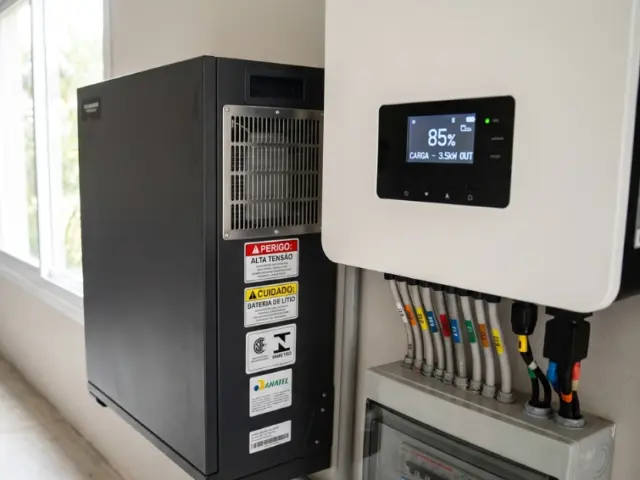
Off-grid systems are also applicable in homes, especially in cases where they are located in more remote regions, for example, on islands and riverside communities. It can be said that these are classic application cases of off-grid systems, consisting of charge controllers, batteries and a DC/AC inverter.

The payback calculation in these cases is not a decisive factor in most cases, as it is difficult to make a tangible value for comfort, the convenience of having energy at all times, or simply having access to energy. The simple fact of having access to electricity with a reasonable investment is in itself the main reason.
Group A consumers
Applications for group A consumers also find benefits in storage. This consumer class includes: industries, supermarkets, shopping centers and hospitals, among others. They are characterized by consuming energy at medium voltage (MT). Many of these consumers have diesel generators as backup, which come into operation when there is a power outage.
Furthermore, these generators also end up being used to generate energy during so-called peak hours. These consumers pay different prices for energy consumed during peak hours (HP) and off-peak hours (HFP).
This difference can cost up to 4 times more for HP than for HFP. This high cost in HP, as incredible as it may seem, can make it viable to generate energy with diesel oil. And this is what many companies do, that is, they disconnect from the grid and start using HP diesel generators.

For consumers who have high demand for HP, solar energy systems with storage can work together or even replace diesel generators, providing a cheaper, cleaner and more sustainable energy alternative. Batteries are less polluting and do not produce noise.
Furthermore, as long as they are well sized and equipped with good equipment, battery systems require less maintenance and do not require filling the fuel tank. Another possibility for group A consumers is the application of peak shaving. But what is this actually?
Consumers in group A pay a contracted power demand. contracted demand is determined based on the consumer's instantaneous power consumption levels. In other words, if the consumer has loads or equipment that can operate simultaneously at a given time, the sum of their powers will determine the amount of kilowatts (kW) to be contracted from the grid.
At times of highest consumption, the power demanded from the network may be higher than the contracted demand of the installation, which may generate a fine for exceeding demand. Battery banks can reduce the connected load seen by the concessionaire, generating considerable savings whenever load peaks exceed contracted demand, freeing the consumer from paying fines for excess demand.

Differentiators for working with battery storage solutions
Compared to conventional on-grid solar PV plant projects, battery systems require additional calculations and design considerations, and some of the nuances are not entirely obvious. From a financial analysis perspective, storage systems require a better holistic understanding that takes into account broader and often difficult to quantify benefits.
This requires greater preparation and skill in negotiations. The benefits of storage may not be so obvious, and a strong relationship with the customer is often necessary. To work with these solutions, solar energy companies need more than ever to be trained and informed about available technologies.
Reference
Peak-shaving: reducing demand peaks with storage systems; Matheus Bueno, published in Canal Solar in September 2020.

Comments
Comments are moderated before publication.Comments should be respectful and contribute to a healthy debate. Offensive comments may be removed. The opinions expressed here are those of the authors and do not necessarily reflect the views of the author. Canal Solar.