
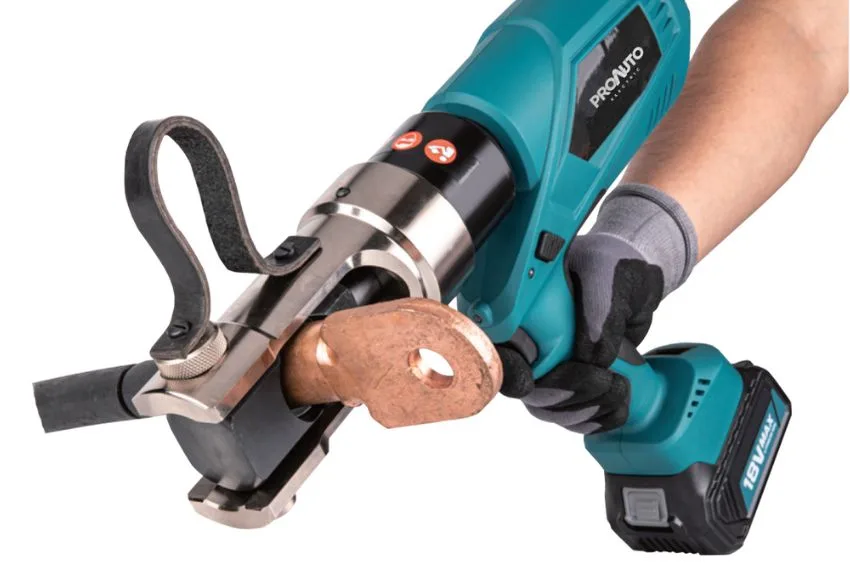
Electrical connections play a crucial role in Safety, efficiency and durability of electrical systems. A poorly executed connection can generate energy losses, overheating and even catastrophic failures, such as fires.
In this context, the hydraulic compression tools They emerge as indispensable allies to ensure reliable and high-quality connections, especially in applications involving grounding systems and crimping of conductors for high-power electrical circuits.
This article explores the theory of electrical connections, emphasizing the importance of proper crimping and the use of correct tools, and covering the main concepts and benefits related to hydraulic compression.
Theory of electrical connections
A quality electrical connection must feature:
- Low Contact Resistance: Allows the passage of electric current with little electrical resistance; minimizing losses.
- Durability: The connection must withstand thermal, mechanical stress and vibrations over time.
- Corrosion Protection: Prevents degradation and increased electrical resistance.
Poorly made connections can generate excessive heating points due to increased electrical resistance, compromising not only the efficiency but also the safety of the system.
Relevance of grounding systems
In the context of systems of grounding, the quality of the connections is even more critical. These systems protect people and equipment against failures such as electrical discharges or surges.
Poorly executed connections in the grounding system can compromise its electrical continuity, reducing the system's effectiveness and increasing risks to human life.
Crimping of bimetallic conductors
Bimetallic terminals, usually composed of aluminum and copper, are widely used in high-current applications due to their combination of cost and conductivity. However, joining these two metals requires specific care to avoid problems such as galvanic corrosion and contact failures.
The role of hydraulic compression
Hydraulic crimping is the ideal solution for crimping connectors and cables in a reliable and durable manner. This process applies controlled pressure, mechanically deforming the terminals and conductors to ensure:
- Homogeneous Contact: Eliminates gaps that could generate unwanted resistance.
- Corrosion Reduction: Reduces exposure to air and moisture with the metal conductor.
- Mechanical Safety: Ensures robust fastening, even under adverse conditions.
Hydraulic compression tools
Hydraulic compression tools stand out for their precision and controlled force, being essential for making reliable connections.
Main benefits
- Uniformity: Ensures consistent force is applied across the entire crimping area.
- Efficiency: They reduce the physical effort of the operator and speed up the installation process.
- Versatility: They are compatible with a wide range of terminals, connectors and cables.
Use in Sets
The selection of the crimping tool, crimping die and terminal must be made in an integrated manner. The use of incompatible components can result in connection failures, even when using high-quality tools.
Conclusion
The quality of an electrical connection depends not only on the execution of the process, but also on the careful selection of each component involved. The hydraulic compression tool must be suitable for the application, ensuring uniform and controlled force during crimping. Likewise, the use of high-quality dies with precise dimensions is essential to ensure that the compression is uniform and provides adequate electrical contact.
Furthermore, the connector material plays a crucial role in the reliability of the connection. Low-quality connectors can compromise the durability of the electrical joint, as well as increase the risk of failure due to corrosion, high resistance or improper deformation.
The combination of appropriate tools, dies and connectors is what defines the efficiency and safety of connections, especially in critical systems such as grounding and crimping of bimetallic conductors.
Investing in compatible, quality equipment and materials ensures not only optimal electrical performance, but also protection against mechanical, thermal and electrical failures, providing a longer system lifespan and minimizing maintenance and replacement costs.
Therefore, prioritizing appropriate tools, accurate dies and reliable connectors is not only a good practice, but a technical necessity to ensure safe and efficient systems.
The opinions and information expressed are the sole responsibility of the author and do not necessarily represent the official position of the author. Canal Solar.



Comments
Comments are moderated before publication.Comments should be respectful and contribute to a healthy debate. Offensive comments may be removed. The opinions expressed here are those of the authors and do not necessarily reflect the views of the author. Canal Solar.