

Article published in the Magazine Canal Solar. Click here and download now for free!
The topic of microgrids has been gaining attention at the same time that the use of photovoltaic solar energy is expanding around the world. Along with solar energy and microgrids, another topic that is gaining a lot of traction is that of storage systems. These three things are closely linked and create possibilities for the supply and use of electrical energy that were previously unimaginable.
The use of distributed power generation systems has been growing worldwide, as well as in Brazil. Our country joined this trend in 2012 with the publication of Resolution No. 482 of the ANEEL (National Electric Energy Agency), which gave consumers the option of producing their own energy. The distributed generation of electrical energy It was no longer a novelty at this time, but it was still not accessible to the large mass of consumers powered at low voltage.
The resolution opened a path, with little bureaucratic complexity, for the connection of distributed generators to low-voltage networks and created the credit compensation system, which is necessary to make distributed generators viable when there is no simultaneity between generation and consumption.
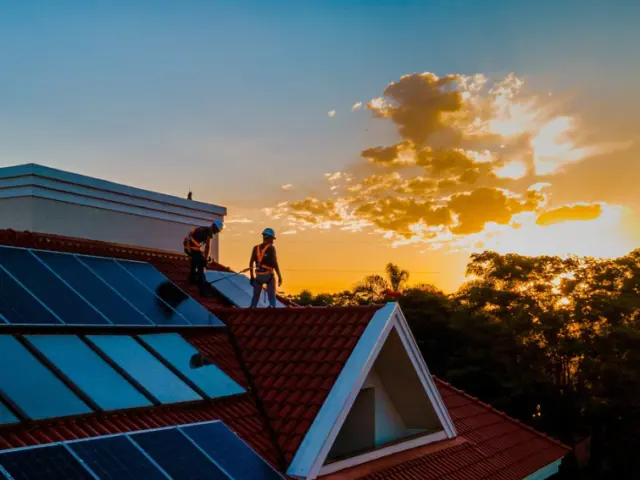
In the distributed generation modality, the most predominant source is photovoltaic solar, due to its easy and quick installation characteristics and use of unused areas, especially on roofs. After gaining the freedom to produce their own energy with distributed generation systems, consumers began to ask themselves: if I can produce all the energy I consume, why do I still need the power grid?
Or else: can I use the photovoltaic system to increase the security of my installation against grid failures? Or: can I add batteries to my photovoltaic system and store energy during the day to use at peak times, when grid energy is more expensive?
These and many other questions can be answered with one word: microgrids. The possibilities for using microgrids are almost endless and can give consumers the freedom to use energy however and whenever they want, even saying goodbye to the public power grid. Microgrids can also be a good answer to political problems, when hidden interests or “forces of evil” oppose the massive insertion of distributed solar generators and other renewable sources in the country’s energy matrix.
In an ideal world, where everyone cooperates for the good, distributed generators would be seen as a force added to the traditional electrical system, saving water in reservoirs, reducing losses in the transmission system and making energy greener and cheaper for the population as a whole.
However, there are objections to this distributed model that could, in the future, make the operation of grid-connected photovoltaic systems unfeasible. Although it is currently economically feasible and technically simpler to operate grid-connected solar generators, there is already technology available for stand-alone operation if we reach the point where this becomes necessary.
Or we can start with something simpler, if the “forces of evil” force us to do so, without the need to operate fully off-grid: we connect to the grid, but we inject nothing into it (this is what we call zero grid export operation or simply zero grid).
We only use grid power when necessary and nullify any technical or political justification against distributed generators. This is perfectly possible with controlled generation capping and storage capabilities that can be incorporated into microgrids when operating connected to the traditional grid.
The Oxford dictionary precisely defines the meaning of the word microgrid, encompassing all the possibilities mentioned in the previous paragraphs (in free translation from English): “a small electricity network with local power supply that is usually connected to the national electricity system but is capable of functioning independently”.
The US Department of Energy says that “a microgrid is a local power grid with controllability, meaning it can disconnect from the traditional power grid and operate autonomously.”
Berkeley Lab defines a microgrid as “a group of interconnected, distributed loads and power sources with a well-defined electrical boundary that acts as a single, controllable entity with respect to the public grid. A microgrid can connect and disconnect from the public grid to enable connected or islanded operation.”
All definitions of microgrids, including these and others that we have not mentioned, converge on the following characteristics or functions that we can obtain with microgrids:
- Resilience or backup: the microgrid makes the supply of electricity to consumers located within its domain safer, and can fully meet energy demand in the event of unavailability of the public grid, whether for short or long periods;
- Energy independence: the microgrid allows for local energy supply, reducing costs for consumers or making them energy independent;
- Efficiency and savings: the microgrid allows for the efficient and intelligent use of energy, providing savings for consumers;
- Peak response: the microgrid makes it possible to respond to local consumption peaks without overloading the public electricity grid;
- Integration of sources: the microgrid allows the integration, for local supply, of different energy sources: diesel generators, gas turbines, photovoltaic systems, small hydraulic generators and wind turbines, for example;
- Energy decentralization: the microgrid decentralizes the generation and use of electrical energy, expanding and enhancing the scope of distributed generation, allowing more energy to be brought to places with weak networks and spreading investments in electrical infrastructure, generating local jobs;
- Autonomy: the microgrid can provide stable and quality electricity supply to remote communities, military bases, small towns or any type of consumer or group of consumers that cannot be connected to the national electricity system.
The list of benefits of microgrids is not limited to the items mentioned above and may be longer. In short, microgrids, as the name suggests, are intended for small and delimited groups of consumers or loads such as a university campus, a hospital, a data center, a community, a commercial complex, a condominium or any group of consumers that differs from the rest of the national electrical system due to its small size, and can be supplied in a grid-connected or isolated manner, combining generators from one or more sources and generally (but not necessarily) supported by battery systems.
There are two important characteristics to remember when trying to define what a microgrid is (or is not):
- The microgrid has a well-defined boundary. All consumers in the microgrid connect to the public grid through a single connection point;
- There is the possibility of isolated or autonomous operation, with its own energy sources.
In general, the main mission of microgrids is to decentralize the supply and management of electrical energy, with the objectives of improving supply or providing energy autonomy to consumers already connected to an electrical system, serving isolated consumers or improving efficiency and enabling the intelligent use of energy in a localized manner.

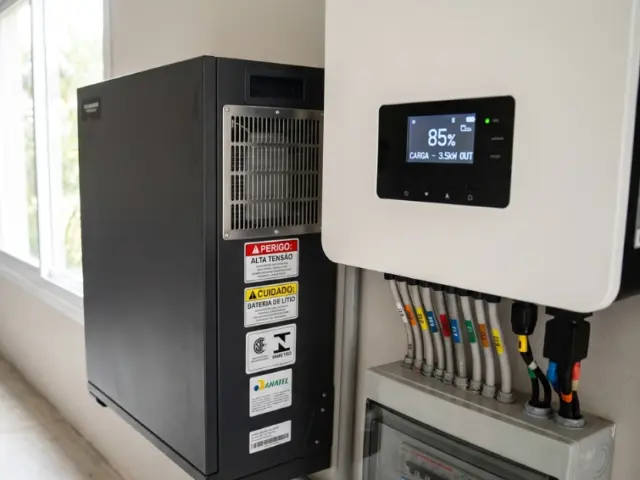
The decentralization and diversification of energy sources, which are the most striking characteristics of microgrids, were only made possible by advances in the field of power electronics, a branch of electrical engineering that deals with the development of electronic converters, such as inverters and other types of equipment, which allow for magical things such as the conversion and integration of electrical energy from different sources, the conversion of direct current to alternating current (or vice versa), the regulation of power flow at any point in an installation, the supply of reactive energy without the use of capacitors or the connection of battery banks to the electrical system.
Some possibilities offered by power electronics and incorporated into the universe of microgrids come up against legal issues, indicating that the evolution of technology is faster than the evolution of laws, regulations and technical standards – not to mention the lobbies that can form to block or slow down the advancement of certain technologies.
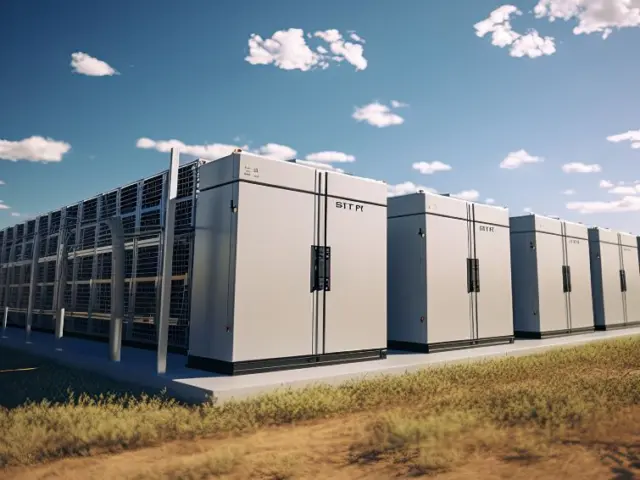
For example, an incredible feature of microgrids that still lacks regulation in Brazil is the possibility of connecting storage systems to exchange energy with the electrical grid, allowing consumers to store energy from the grid itself at certain intervals to use at other times. This possibility is fully aligned with the mission of microgrids: to enable management and provide efficient use of electrical energy in a localized manner.
Another possibility, which we mentioned at the beginning of this text, would be the decentralized supply of a small group of consumers, who can choose to operate in a completely isolated manner or switch between off-grid and on-grid modes as needed.
In the previous case, even if the microgrid operates in an isolated manner, with no contact with the public electricity grid, this involves a change in legislation to allow the owner or manager of the microgrid the right to commercialize energy, distributing it to internal consumers. If the microgrid operates alternately in on- and off-grid modes, there will be a need to define rules for the disconnection and reconnection processes.
These regulatory and legal problems affect not only Brazil, but several parts of the world where microgrids are being studied and are already beginning to be used.
There are still challenges to be overcome, mainly regulatory ones, for the widespread use of microgrids, which only bring benefits to consumers and the national electrical system as a whole. But the good news is that the technological barriers to the decentralization of electricity generation and use are no longer a problem.
Microgrids are part of and an indispensable part of the energy transformation that the world is going through today, in which we are seeing the accelerated insertion of renewable sources, the decentralization of electricity generation and the adoption of electromobility, which will require reinforcements in the electrical grids that may not be possible without microgrids.
References
- Electric microgrids: a proposal for implementation in Brazil, MM H Bellido, 2018
- The future of microgrids, Brazilian Microgrid Association, 2021
- A literature review of Microgrids: A functional layer based classification, F. Martínez, A. Miralles, M. Rivier, Renewable and Sustainable Energy Reviews, 2016
- Microgrids: A Review of Status, Technologies, Software Tools, and Issues in Indian Power Market, IETE Technical Review, S. Sharma, Y. Sood, 2020
- How microgrids work, U.S. Department of Energy, 2014
- Microgrids – What Are They and How Do They Work?, N-Sci Technologies, 2019


Comments
Comments are moderated before publication.Comments should be respectful and contribute to a healthy debate. Offensive comments may be removed. The opinions expressed here are those of the authors and do not necessarily reflect the views of the author. Canal Solar.