
A ANEEL The National Electric Energy Agency (Agência Nacional de Energia Elétrica) assigned to director Agnes da Costa the reporting of processes related to the CDE (Energy Development Account) ceiling and the implementation of the ECR (Resource Complement Charge).
There is still no public decision that allows us to say for sure that distributed generation will be penalized. But the sector needs to monitor the process from now on. The CDE (Energy Development Fund) defines how billions of reais in subsidies and public policies are distributed among consumers.
Changing your methodology is not just an accounting decision. It's a choice about who will pay more and who will pay less. The risk is that, under the guise of tariff balance, consumers with their own generation will end up absorbing costs they didn't create.
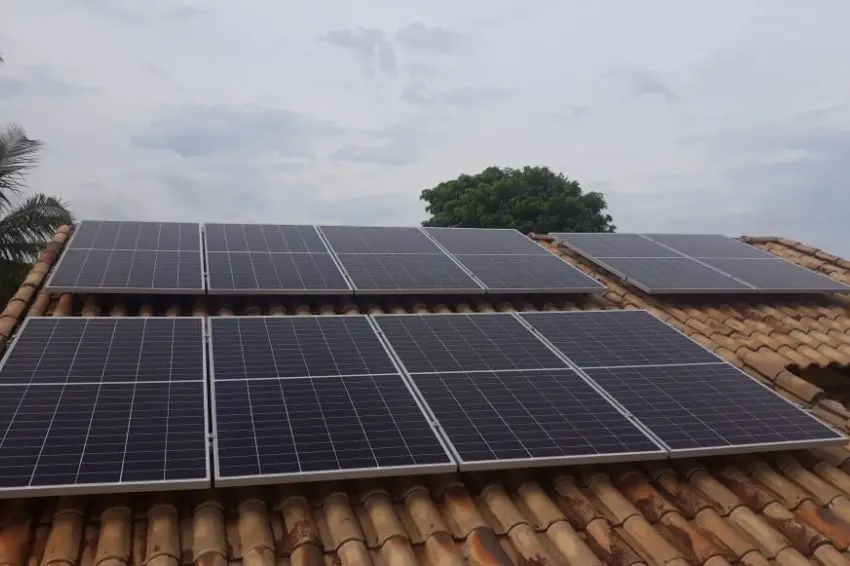
Distributed micro and mini-generation (MMGD) is the result of private investment by families, businesses, and rural producers who purchased equipment, took risks, generated jobs, and expanded the energy supply without depending on direct state investment.
This does not preclude a technical review. However, any change must respect Law No. 14.300/2022, acquired rights, proportionality, and the effective relationship between the costs attributed and the benefits provided to the system.
It would also be inappropriate to treat all distributed generation as if it had the same impact on the grid. The effects vary by location, time, and penetration level. Therefore, modern regulation should use locational and time-based signals, as well as encourage storage, demand response, and reduction of peak consumption.
Before any deliberation, the ANEEL It should present objective simulations:
- How much does each class pay today?
- How much would I then have to pay?
- What is the specific impact on MMGD?
- What costs justify the transfer?
- What alternatives were analyzed?
INEL (National Institute of Clean Energy) does not claim that the rapporteur will adopt a measure contrary to distributed generation. It only states that the sector cannot discover, after the decision, that an apparently technical formula transferred historical costs to millions of consumers who decided to produce their own energy.
When the bill doesn't decrease, the real debate is about who it was transferred to. The CDE (Energy Development Fund) needs to be reviewed with transparency, efficiency, and social participation. What cannot happen is transforming the pursuit of affordable tariffs into yet another attempt to blame distributed generation for the structural imbalances in the electricity sector.
The opinions and information expressed are the sole responsibility of the author and do not necessarily represent the official position of the author. Canal Solar.


Comments (5)
Comments are moderated before publication.Comments should be respectful and contribute to a healthy debate. Offensive comments may be removed. The opinions expressed here are those of the authors and do not necessarily reflect the views of the author. Canal Solar.
Exactly. Excellent work. Tax relief for investors is necessary.
Yet another way to penalize those who seek sustainability and independence from the official energy system.
Unfortunately, honest people end up paying the bills for the corrupt.
How did I end up being born in a country like this, where everyone works to screw us over, especially hardworking and honest people?
Generating solar energy is not allowed, but generating polluting energy is.