

Bill 5.017/2019, which is currently being processed in the Senate, provides for, among other measures, the contracting of 2,5 GW of natural gas-fired thermal power plantsIt was born with a proposal quite different from the themes that today place the project at the center of discussions in the electricity sector.
The original text dealt with granting discounts on energy tariffs for irrigation, aquaculture, and the exploitation of semi-artesian wells. However, during the legislative process, the bill gained new provisions related to the electricity sector.
In July, the Senate's Infrastructure Services Committee (CI) approved a substitute bill. Among the measures included in the text is the contracting of 2,5 GW of natural gas-fired thermal power plants with 70% inflexibility.
One of the criticisms of the proposal lies precisely in the inclusion of contracts that were not part of the initial objective of the proposal, as explained by Daniela Coutinho, executive vice-president of ABRACE Energia (Brazilian Association of Large Energy Consumers and Free Consumers).
“The mandatory contracts in the bill, which have nothing to do with the original scope of the project, create long-term obligations to contract energy at a high cost, disregarding all the technical alternatives that sectoral planning could evaluate for more efficient contracting,” he explains.
According to the organization's estimate, the annual cost of this contract could reach R$ 12 billion per year in the electricity bills of Brazilian consumers.
The inflexibility of thermal power plants is being questioned.
Inflexibility means that power plants must generate energy for a certain period regardless of the system's immediate needs.
Daniela explains that this mechanism is not aligned with the main current challenge in the operation of the electrical system, which is to meet the increased demand in the late afternoon and early evening, when solar generation decreases.
For her, the problem lies in turning into legal obligations contracts that could be defined based on the needs identified by the planning of the electricity sector.
The executive also draws attention to the risk of increased curtailment, a situation in which some of the available renewable energy is not used because the system cannot absorb it all.
In this scenario, the mandatory generation of thermal power plants could increase competition for space in the system during periods of high production from renewable sources.
Natural gas of Amazonian origin
Another point of contention is the requirement to contract natural gas-fired power plants originating from the Amazon, linked to the structuring hydroelectric plants in the Northern region. The proposal envisions the use of these plants as a way to complement hydroelectric generation and reduce the effects of seasonality.
In Daniela's assessment, however, the prior definition of the source and location of the plants reduces the possibility of choosing potentially more efficient alternatives. "The big problem isn't exactly using natural gas, it's establishing by law that this will have to be the mandatory alternative adopted," she states.
According to her, even if studies by EPE (Energy Research Company) indicate the need to contract thermoelectric plants, it would be possible to evaluate different alternatives regarding location, infrastructure, and contract duration.
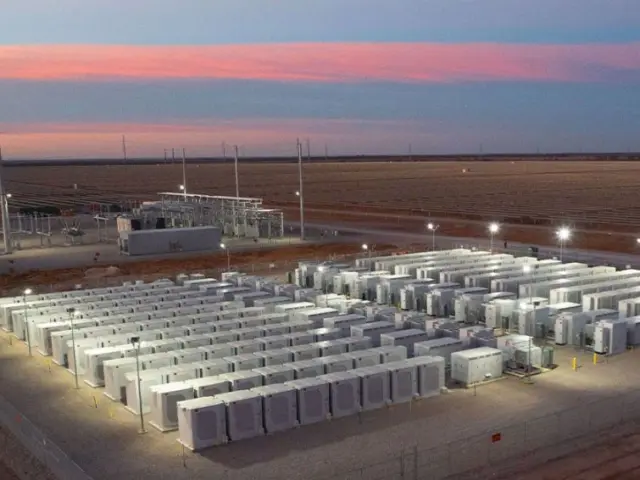
Other solutions could also be considered to meet the system's needs, such as energy storage using batteries or reversible power plants.
Abrace estimates that contracting gas-fired power plants using Amazonian resources could reach R$ 31 billion per year, considering the full implementation of the measure. This amount is part of the set of costs that, according to the organization, could put pressure on consumers' electricity bills.
Infrastructure also comes into the discussion.
According to Ricardo Vidinich, coordinator of the Energy Technical Chamber at IEP (Engineering Institute of Paraná), the infrastructure needed to make these contracts viable is another point that needs to be considered.
He questions the need to build infrastructure to transport natural gas to regions that already have transmission lines capable of carrying energy produced in other parts of the country.
"It makes much more sense to build a thermal power plant in Rio de Janeiro, in Campos dos Goytacazes, which is where the gas from the offshore exploration platform arrives." Petro"It's better to build a gas pipeline there than to build one, all the way to Foz do Iguaçu, in Paraná," he said.
Ricardo also points out that the electricity bill is composed of different components, including generation, transmission, distribution, charges, and taxes. Therefore, the impact of new contracts needs to be analyzed considering the effect on the entire tariff.
For him, the central point of the discussion is system planning. In the expert's assessment, decisions regarding energy and power contracting should stem from the sector's actual needs, and not from determinations previously established by law.
The project began its legislative process in 2015.
Before reaching the Senate as Bill 5.017/2019, the proposal began its legislative process in the Chamber of Deputies in October 2015 as Bill 3.392/2015, authored by then-federal deputy Beto Rosado (PP-RN).
The original proposal amended Law No. 10.438/2002 to grant special discounts on energy tariffs used in irrigation, aquaculture, and the exploitation of semi-artesian wells for human consumption.
The project arrived in the Senate in 2019. In 2021, it received a favorable opinion from the CRA (Committee on Agriculture and Agrarian Reform) and moved on to the CI (Committee on Infrastructure Services).
On July 14, 2026, the CI approved the report by Senator Hermes Klann (PL-SC), in the form of a substitute bill. In the presentation of the report itself, the rapporteur stated that the first article maintained the original objectives of the project related to tariff benefits, while the text incorporated other measures for the electricity sector. Currently, the bill continues to be processed in the Senate.
all the content of Canal Solar is protected by copyright law, and partial or total reproduction of this site in any medium is expressly prohibited. If you are interested in collaborating or reusing part of our material, please contact us by email: redacao@canalsolar.com.br.

Comments
Comments are moderated before publication.Comments should be respectful and contribute to a healthy debate. Offensive comments may be removed. The opinions expressed here are those of the authors and do not necessarily reflect the views of the author. Canal Solar.