
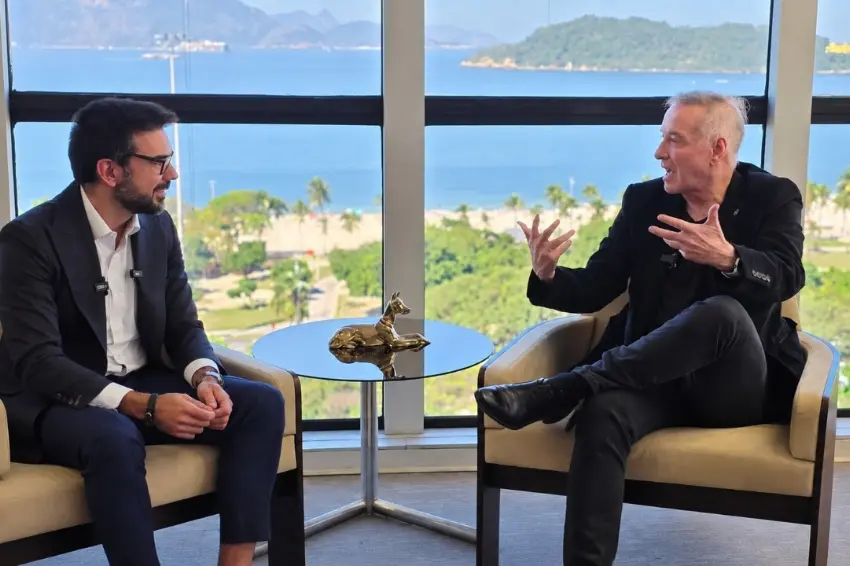
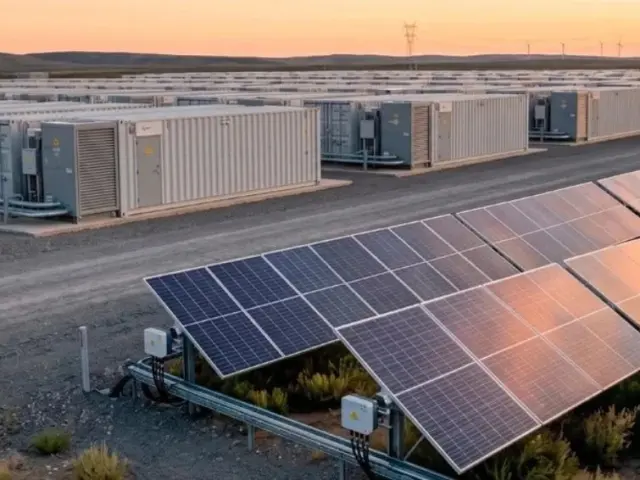
The drop in the price of photovoltaic modules and batteries has made the combination of solar generation and storage "unbeatable," according to Eike Batista.
In an interview with Canal SolarThe businessman pointed to sodium batteries as one of the next frontiers in the sector and projected that the advancement of clean technologies should gradually reduce the share of oil in the energy matrix and in transportation.
“It’s game over for oil,” Eike stated. According to him, the commodity could be trading below US$30 in 2030, pressured by the expansion of global supply and the growing competitiveness of solar energy combined with storage.
Throughout the interview, the businessman also linked energy availability to the dispute between China and the United States for leadership in artificial intelligence, spoke about the advancement of electric vehicles, recalled a meeting with Elon Musk, and presented his bets on biotechnology, Supercane, and humanoid robots.
The projections, estimates, and opinions presented during the interview represent Eike Batista's views. The contextual data shown in the video were provided by... Canal Solar with its respective sources.
Falling costs favor solar power with batteries.
According to Eike, the cumulative reduction in the prices of photovoltaic equipment and storage systems has changed the economic viability of projects capable of generating and storing their own energy.
The businessman stated that he would not have recommended this investment a year or two ago, but that technological advancements and falling costs have changed his assessment.
"If you're someone who studies and does calculations, building a solar power system with batteries is unbeatable today. I wouldn't have recommended it a year or two ago," he stated.
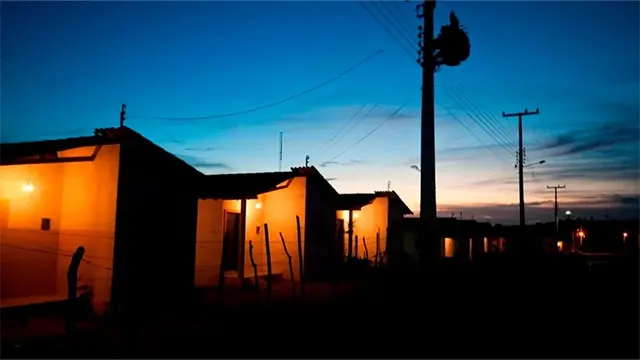
In Eike's view, the price reduction opens up new possibilities for residential systems, rural properties, and off-grid developments, especially in locations with available space for installing the modules.
"Solar panels are becoming increasingly efficient and have fallen in price by more than 90%. Another phenomenon to consider in this discussion is that batteries have also fallen in price by more than 90%," he stated.
During the interview, he estimated the cost of energy produced by a solar system combined with next-generation batteries at approximately R$1 per MWh. For comparison, he cited a cost of around R$2 per MWh for diesel-powered generation.
"Solar power with these latest generation batteries: R$1 per MWh. So, solar power with batteries can create an off-grid system. The problem was that the batteries were very expensive," he said.
Costs may vary depending on project size, application, consumption profile, equipment cost, location, and financing conditions.
Eike also estimated that a residential system could recoup the investment in approximately five years and remain operational for a period of between 25 and 30 years.
"You've paid for yourself in five years. After that, you have 25 years of free energy," he stated.
Eike bets on sodium batteries.
Among storage technologies, Eike highlighted sodium-ion batteries as an alternative for stationary applications.
According to the businessman, the use of a more abundant input and the expansion of industrial production can contribute to cost reduction. He cited the construction of factories in China and mentioned manufacturers such as CATL and... BYD among the companies that are advancing in this technology.
"This combination of solar panels, which are becoming increasingly cheaper and more efficient, with this new set of batteries is unbeatable. This is the energy source of the future," he declared.
According to Eike's assessment, China still absorbs a large part of the initial production of sodium batteries. In the Brazilian market, he observed, lithium-ion technology remains the most widely available option.
"The Chinese are absorbing the majority because they are the major producers and are installing these systems in China. I don't know when they will be available to us here," he said.
Eike also stated that he believes sodium batteries could have a lifespan of up to 100 years. "Sodium batteries last 100 years. I'll repeat: 100 years," he declared.
The projection was presented by the businessman, who argued that greater durability, availability of raw materials, and increased industrial scale could make storage more competitive.
Energy could define the race for artificial intelligence.
The expansion of artificial intelligence and data centers is expected to increase the strategic importance of electricity supply.
For Eike, the ability to generate energy on a large scale will be one of the determining factors in the global technological race. "Whoever wins the energy generation race wins the artificial intelligence race," he stated.
When comparing China and the United States, the businessman assessed that China's industrial and energy scale puts the country at an advantage. "It's impossible to compete with China in the capacity to generate more energy. On that point, the United States has already lost," he stated.
According to Eike, China combines the manufacturing of power generation equipment with the expansion of solar energy and the construction of new power plants, including coal-fired projects. In his assessment, the United States still has an advantage in certain semiconductors, but faces limitations in expanding its energy infrastructure.
"Regarding the most efficient chips, they say the United States still has an advantage. But in the race to make the system work, the Chinese have already won," he stated.
Electric cars should increase their market share.
Eike also assessed that electric vehicles have advantages over combustion engine models in terms of energy efficiency, cost per kilometer, and maintenance.
According to him, China has built a competitive market position by simultaneously investing in rare earths, batteries, electric motors, and automotive production. "You can't compete with electric cars for individual use," he said.
The businessman also highlighted the evolution of autonomy. According to him, models that previously offered a range between 100 km and 200 km have given way to vehicles capable of traveling between 300 km and 600 km on a single charge.
"Three years ago I wouldn't have recommended an electric car. They still had limited range. Now it's 300 km, 400 km, and there are cars with 600 km," he stated.
According to Eike's assessment, the cost per kilometer driven can be up to five times lower than that of a gasoline or diesel-powered vehicle, depending on the price of energy in each state.
As an example, he recounted a conversation with a driver who had reduced his monthly fuel expenses from R$ 4,2 to approximately R$ 600 with recharging his phone.
Eike also highlighted the potential for a second life for automotive batteries. After losing some of the capacity needed for use in vehicles, they can be reused in stationary storage systems.
Oil could fall below $30.
Despite acknowledging the scale and competitiveness of Brazilian production, Eike predicts a significant drop in international oil prices in the coming years. "By 2030, oil will be below US$30," he projected.
The expectation is related to the potential expansion of global supply and the advancement of alternatives such as solar energy, batteries, and electric vehicles.
The businessman cited Venezuelan reserves, US production, and new Brazilian exploration frontiers as factors capable of maintaining a high availability of the commodity.
"The Stone Age didn't end because there was a lack of stone. The oil age will also end with plenty of oil still available," he declared.
Despite speaking of a "goodbye" to oil, Eike acknowledged that the replacement of fossil fuels will not be immediate. The global fleet of vehicles, machines, buses, tractors, locomotives, and ships, in addition to the infrastructure built around these derivatives, will likely prolong the use of this energy source.
"It will take at least 20 years to replace all of this. But it will happen," he assessed.
The meeting with Elon Musk
During the interview, Eike recalled a meeting with Elon Musk that took place in 2008, before the consolidation of Tesla and SpaceX.
According to the Brazilian businessman, Musk was at his home at a time when he was still facing financial difficulties. Eike stated that he had just received US$3,8 billion related to a deal with Anglo American, while Musk reportedly had approximately US$30 million available.
"He was standing in front of me with $30 million, and I had $3,8 billion. He didn't ask me for money. What a shame," he said.
Eike said that he also did not propose investing in Musk's businesses because, at that time, he was not yet closely following SpaceX.
“I didn’t ask for a share of his company either. In 2008, nobody really knew what SpaceX was. I wasn’t following it that closely,” he said.
According to his recollection, Musk soon received a contract from NASA that contributed to the continuity of the aerospace company.
Supercana and new businesses
When discussing his current initiatives, Eike highlighted biotechnology applied to sugarcane as an opportunity for Brazil. The businessman stated that he is working with a variety called Supercana, which, according to him, can produce up to three times more ethanol and up to 11 times more bagasse.
“Our Supercane produces up to three times more ethanol and up to 11 times more bagasse. But it's not just for making ethanol or sugar. It's to help replace plastic,” he said.
The strategy is to use the bagasse in the manufacture of straws, packaging, and other higher value-added products, instead of exclusively allocating it to energy generation. "Bagasse is often wasted or burned to generate energy, but it's a very valuable product to be burned," he assessed.
According to Eike, Brazil can combine its biomass production capacity with industrial equipment and technologies developed in China. The raw material would be grown in the country and transformed into products intended to replace plastic packaging.
Humanoid robots and the future of work
Another topic discussed was the expansion of artificial intelligence into the physical world, through robots capable of performing industrial, domestic, and service-providing activities.
Eike believes that so-called superintelligence could emerge by 2030 and accelerate the development of humanoid robots. "When we reach superintelligence, one robot will manufacture another robot," he stated.
According to him, automation could help companies address the shortage of workers in areas such as construction, maintenance, and services. At the same time, it is expected to cause profound changes in the labor market. "The robot will take my job, our jobs," he said.
When asked about the role of humans in the face of more advanced machines, Eike responded provocatively: “We will be the monkeys. The humanoids will look at me as I look at an ignorant monkey,” he pointed out.
According to the vision presented during the interview, companies that control the manufacturing, software, and updates of robots could concentrate a significant portion of the global workforce.
Despite the potential impacts on employment, Eike believes that automation could increase productivity, expand the supply of products, and accelerate advances in areas such as medicine and services.
Watch the full interview at Canal Solar
all the content of Canal Solar is protected by copyright law, and partial or total reproduction of this site in any medium is expressly prohibited. If you are interested in collaborating or reusing part of our material, please contact us by email: redacao@canalsolar.com.br.

Comments
Comments are moderated before publication.Comments should be respectful and contribute to a healthy debate. Offensive comments may be removed. The opinions expressed here are those of the authors and do not necessarily reflect the views of the author. Canal Solar.