
Battery energy storage systems still represent a small portion of GreenYellow's investments in Brazil, but they are beginning to gain ground in the company's portfolio.
The expectation is that the segment will at least double in size next year and account for 10% to 20% of the company's annual investments in the country, currently between R$ 200 million and R$ 300 million.
The growth is driven primarily by commercial and industrial consumers interested in reducing peak-hour costs. At the same time, applications such as backup, demand control, and power quality improvement are beginning to enter the analysis of companies.
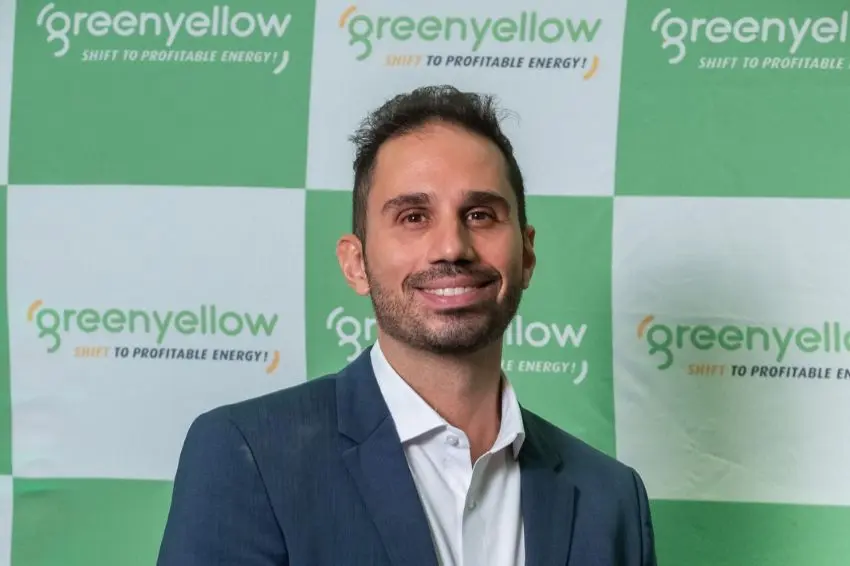
According to Fernando Oliveira, commercial director of GreenYellow Brazil, the market still needs to mature. One of the main challenges is overcoming the idea that BESS can simply be installed to solve any energy problem. Each application requires a specific analysis of the consumption profile, critical loads, and available windows for charging and discharging the battery.
In an interview with Canal SolarOliveira explains how GreenYellow structures these projects through the Energy as a Service model, in which the company assumes the initial investment and part of the implementation and operation risks.
He also discusses the segments with the greatest potential, the return on investment of projects, the evolution of equipment prices, and the regulatory barriers preventing batteries installed at consumer sites from providing services to the electrical grid.
How does the Energy as a Service model work when applied to solar power generation and storage projects?
The Energy as a Service This is the type of project where GreenYellow makes the investment. The project is installed at the client's site, but our company is the one paying for it.
It's not simply a financial solution. We also handle the operation of the assets. In the case of a solar power plant installed on the roof of a factory, for example, GreenYellow assembles the plant and then takes over its operation and maintenance.
The customer only starts paying a monthly fee, which covers equipment rental, operation, and maintenance, after the asset is operational.
We assume the risk of implementation and, often, also the risk of operation. We have contracts with performance levels and are penalized if the asset does not deliver the promised performance.
Therefore, it's a solution that goes far beyond financing. It involves engineering, operation, maintenance, and ultimately, risk. We are transferring some of the risk that would be with the client to GreenYellow.
What risks and responsibilities fall to GreenYellow, and which remain with the client?
GreenYellow handles all supplier contracting. We are responsible for, for example, project delivery deadlines, the financial capacity of the contracted companies, compliance with safety standards, and necessary certifications.
We also made a commitment to implement the project on schedule. If there is a delay, we don't get paid. Therefore, this financial risk also rests with us.
During the asset's lifespan, we can assume the availability and even generation risk. If the inverters experience problems and the plant's availability falls below expectations, GreenYellow assumes that risk.
When we have a generation-based contract, we handle all preventive and corrective maintenance, as well as cleaning. If the plant was supposed to generate 100 MWh in a month, but only generated 90 MWh, we receive payment proportional to the 90 MWh. In this case, the generation risk also rests with us.
On the other hand, if the downtime is caused by the customer, the risk lies with them. If the customer intervenes in a way that knocks down the inverter, or if a truck hits a structure, for example, that is an inherent risk of the customer's operation.
If a fire occurs on the premises, the equipment must be covered by the client's insurance policy. There are shared risks, but the risks related to the implementation and operation of the project are primarily borne by GreenYellow.
What criteria are used to decide if a company is eligible to receive a project without initial investment?
First, it's important to explain our customer profile. GreenYellow develops large-scale projects, generally starting from 500 kWp.
We can undertake smaller projects when there is a multi-site operation. A supermarket chain might have, for example, three 300 kWp projects. In this case, there is the possibility of achieving economies of scale.
We assess the size of the project and the client's creditworthiness. The fact that there is no initial investment does not mean that the project is intended for a client with payment problems.
It's a solution for companies that want to preserve capital and direct it towards their core business. The client can get a greater return by investing in opening a store or buying a new machine. Generating energy isn't their business, it's ours.
Therefore, we seek clients with a good credit profile, but who have a capital allocation strategy focused on their core business.
We also assess the structural conditions. The client needs to have an area available to accommodate a power plant on a roof, ground, or carport. All our roof projects undergo a structural assessment, the cost of which is also covered by GreenYellow.
There are prerequisites that need to be met before implementation. We will not develop a project if the report indicates that the roof cannot support the weight of the equipment. Therefore, we analyze the structural and financial conditions, as well as the client's profile.
How many projects does GreenYellow already have using this model?
GreenYellow has approximately one thousand assets in operation in Brazil, including projects in energy efficiency, generation, and batteries.
We've been in the country since 2014. Most of these projects are in the retail sector, but our team already manages and operates over a thousand assets in Brazil.
Do projects combining solar power generation and batteries still represent a small niche for the company?
It's still a smaller niche, but it's expanding. We started operating in this market in Brazil last year. In Europe, the company has been operating for a little longer.
We completed our first Brazilian project last year and are seeing even greater growth this year. Due to the maturity of both our clients and the technology, we are experiencing a ramp-up in demand.
What is the expected growth rate for this portfolio?
We expect to at least double in size next year. We're also seeing a greater variety of projects.
When you talk about doubling in size, are we talking about going from what size to what size?
This is a number we prefer not to disclose. But GreenYellow invests between R$200 million and R$300 million per year in Brazil. The expectation is that batteries could account for between 10% and 20% of that amount in the coming years.
What has changed in companies' perception of the role of storage systems?
I think that's still changing. There's an adoption curve. Some companies are interested in the technology from the start. These are the early adopters, who already know the solution, have been following the market for some time, and conduct studies to assess its financial viability.
What we are noticing is that companies are beginning to understand that BESS can perform various functions. They are gaining a better understanding, for example, of how the battery can function as a backup.
Companies with very specific needs and critical loads are beginning to see batteries as versatile equipment capable of delivering high-quality power.
When the system is properly designed and there is an engineering solution behind it, BESS can eliminate problems caused by instantaneous failures, voltage fluctuations, and microinterruptions.
But we need to clearly distinguish between the applications of the UPS and the battery. The BESS used as backup was not designed for very long interruptions.
A supermarket might have a diesel generator ready to operate if the unit loses power for a day or two. The battery, in turn, can handle a two- or three-hour interruption and can also be used during peak hours.
I think companies are starting to understand this function better. BESS wasn't designed to sustain operations for several days, but it can handle shorter outages or specific needs, such as micro-interruptions and finer power quality issues.
There is also the off-grid niche, in which BESS partially replaces the diesel generator. In this case, a hybrid solution can be much more advantageous. The combination of solar and battery generation tends to present a better economic balance than a solution based solely on the diesel generator.
Given the increase in extreme weather events, is backup a priority for companies, or do other functions still weigh more heavily in the decision?
What I observe is that most decisions are still geared towards arbitrage. The greatest demand is for shifting consumption between peak and off-peak hours. It's the customer who wants to avoid the higher cost during peak hours.
With the removal of discounts applied to network usage for new consumer units in the free market, peak costs have increased. Most of the demand comes from customers who want to avoid this cost.
There are distributors with very high peak rates, as is the case in Bahia, Pará, and Piauí. When we look at this cost without the discount for incentivized energy, the BESS (Balanced Energy Sector) can balance the calculation.
In the context of extreme weather events, I imagine that backups also play a role, but I believe they still appear as a bonus in the customer's mind.
In my view, this should be better quantified. It's necessary to calculate the value of the loss caused by the interruption, because BESS can help improve the competitiveness of industry and commerce.
But the businessman usually looks first for the most predictable return, which comes from arbitrage.
Weather events can also put pressure on energy prices. Drier weather in the Southeast region, for example, can mean higher prices. In this scenario, BESS solutions and, especially, solar generation start to make more sense.
These projects provide greater predictability to energy consumption and spending in the face of price fluctuations and regulatory changes.
Which commercial and industrial sectors are demanding more projects that combine solar power generation and BESS (Build-Side Energy Efficiency)?
I see significant demand in retail, especially among multisite companies that want to reduce costs during peak hours.
Supermarkets calculate the payback period quickly. In states like Bahia and Pará, we have financially viable solutions. The food retail sector is always very attentive to costs because it operates with tight margins.
I also see a large demand in agribusiness, often to address the lack of available energy. There is, especially in the Matopiba* regions, a very large pent-up demand from customers waiting for connection.
The bottleneck for increasing agribusiness productivity in these regions may be precisely energy. Many producers are already looking at hybrid solutions because they understand that grid expansion will not happen anytime soon and they need an alternative to meet their operational needs.
Some crops may offer a better return. In locations where irrigation occurs for ten months of the year, for example, the battery may be used more frequently and, consequently, yield a more attractive financial return.
Solar power generation is intermittent, and BESS (Battery Energy Storage System) has limited storage capacity. When irrigation is predictable, there is also greater predictability in storing and using energy. Crops like cotton, for example, may be more favorable for solar power generation projects with batteries.
A third group includes some industries that face power quality problems or see arbitrage opportunities.
Industries are more concentrated in the South and Southeast, but there are regions in the Southeast with higher peak rates and problems with supply quality. We also find units at the end of the network or without sufficient contracted demand.
There are industries that need to expand demand but can't. They risk paying fines or, ultimately, being disconnected, but they also can't interrupt operations. In these cases, they need a BESS (Business Support System).
Therefore, I see three main niches: agribusiness, retail seeking to reduce costs in the short term, and industry facing problems with energy quality or availability.
Has the demand for these projects already effectively increased, or is the market still in a maturing phase?
There's still a lot of misunderstanding. Many people think that a battery solution is plug and play, and it's not. The solar sector itself is still developing the skills to make sales more consultative. Battery sales need to be consultative.
Both the demand and supply sides require qualified individuals. Therefore, companies with technical expertise and who are willing to assume the risks of implementation and operation are important.
Customers often lack this knowledge and may end up buying a pig in a poke. Someone might promise that simply installing a piece of equipment will solve all the problems, but it's not quite that simple.
Consumers need to rely on a company that understands the subject matter and, often, also assumes the operational risk. Several training initiatives already exist.
Distributors are doing this work and portals like the Canal Solar, which needs no introduction, also helps bring information to the market. This gap is being filled little by little, but we are still at the beginning of the journey.
What information needs to be analyzed to correctly size a BESS project?
The first step is to understand what problem BESS intends to solve. If the goal is to reduce high peak-hour costs, the analysis is simpler. We look at the customer's consumption during that period, how it's distributed throughout the year, and size the system at the optimal point.
If on one day the customer consumes 2 MWh at peak and on another day 5 MWh, we need to decide whether the BESS (Balanced Energy System) will be sized for 2 MWh or 5 MWh. It is necessary to find a system that meets most situations at the lowest possible cost. This is the logic of arbitrage-oriented sizing.
When there is a power outage issue, the analysis is more delicate. We need to know how long the interruption lasts and how sensitive the loads are.
There may be equipment that needs to be backed up within a second. If this doesn't happen, there will be a loss of production. In this case, BESS (Battery System Efficient Use) may be applicable, but we also need to assess whether a battery is really the best solution or if a UPS (Uninterruptible Power Supply) would be more appropriate.
It's necessary to know the power requirements of critical loads and, often, to segregate loads. A battery-powered storage and service system (BESS) can handle a specific critical load, while another part of the operation doesn't need to be sustained by the battery. It's an engineering solution that needs to be carefully studied.
When the problem is demand, the approach is different. Sometimes, the client is exceeding their contracted demand and believes they need to install a BESS (Battery Energy Storage System). But it's necessary to check if there's a window for charging the battery.
If the customer consistently exceeds demand, there is no window left for charging. It may be necessary to install a solar system to produce enough energy, charge the battery, and discharge it at the most opportune moment, performing peak shaving.
These are three applications with very different approaches. In backup, we have a more customized solution. In arbitrage, we work with probability, statistics, and consumption analysis. In demand control, we need to look primarily at the available window for loading BESS.
Is there an average return on investment timeframe for these projects in Brazil?
It varies depending on the distributor and the application. Because GreenYellow operates on an Energy as a Service model, the client doesn't need to look at the return on investment. They compare the value of our installment with the savings generated.
There are regions, like Bahia, where our share can be lower than what the customer would pay during peak hours. In that case, the return is immediate. From the moment the system starts operating, the customer begins to save money.
From the perspective of someone investing with their own capital, there are regions with a higher spread between peak and off-peak areas where the payback period can be between two and three years.
In Bahia, for example, this difference can exceed R$ 2 per MWh. In other regions, the return is longer. In São Paulo, this difference can be less than R$ 1 per MWh, bringing the payback period to approximately eight years.
In the case of backups, it largely depends on each client. I've seen companies that have mapped losses amounting to millions of dollars. There are operations where each hour of downtime costs R$300. In that case, the return on investment depends on the losses that the backup battery can prevent.
Has the drop in battery prices already made it possible to make projects viable without incentives?
There has been a very large reduction in prices over the last two years, but I think we are already reaching the belly of this curve. This decline is beginning to stabilize.
At the same time, China withdrew the rebate (incentive program) granted to manufacturers. Therefore, we should expect an increase in battery prices by the end of the year.
The recent reduction was due more to oversupply than to economies of scale. There are still economies of scale that can be captured in manufacturing, but the supply of equipment has been a determining factor in prices.
Over the past two years, many projects have turned a profit. Can this trend improve further? I think so, but in a more incremental way. The biggest leaps in return have already happened.
I often tell my clients this: don't just sit on a project. If it's already showing a return, act now. Inaction can be more costly than the opportunity cost of waiting.
Equipment has already reached attractive prices, and energy is getting more expensive. It's better to act now than to keep waiting.
Has the market already factored in the impact of the end of the Chinese price rebate?
I don't think so. The equipment needs to be shipped from China sometime this year. There are stocks at distributors, cabinets are available, and equipment is in containers.
I think we're still in a phase of capturing orders that will be priced later, partly due to the supply aspect. A good project is highly valued. We're still in the project feasibility phase.
What barriers still limit the expansion of warehousing among commercial and industrial consumers?
The cost of capital is a structural problem in Brazil. I hope that this issue, especially from a fiscal standpoint, will be resolved in the coming years so that we can reduce this cost.
This affects not only energy solutions, but the very operation of companies. Projects that are not part of their core business end up taking a back seat.
If a company has a very high cost of capital, it will direct resources to projects considered essential and with higher returns. That's precisely why the GreenYellow model works.
A company probably won't put a R$5 million or R$10 million solar power generation project at the top of its investment queue. It may prioritize reducing debt costs or expanding operations.
Although energy is essential, a solar project is not directly related to the core business of most of these companies. This greatly affects the sector, especially in the commercial and industrial segments, because these companies are restricting the use of capital expenditure (capex) in energy projects.
In general, companies are moving away from using their own capital in utilities projects. Therefore, the sector is seeking solutions to eliminate this barrier.
But this is a global trend. There is a McKinsey study that shows that companies that direct their equity capital towards their core activities have more free cash flow and a higher return on investment.
Regardless of the cost of capital in Brazil, this model is related to risk allocation and focus. Companies need to reduce distractions.
Energy is an essential element, but it's not their core business. It should be a strategic priority, but not necessarily an operational one. My message would be: leave the operation to a specialized company, but don't neglect the design phase.
Does the lack of price signals limit the participation of low-voltage consumers in the energy storage market?
This discussion about price signals for low voltage is still in its early stages. I believe that clearer signals for high voltage would yield faster responses for energy storage projects.
Low-voltage consumers still have little awareness of their own energy bills. The white tariff is a start to boost battery sales, but I still see it as very nascent. I don't foresee a very large impact in the short term.
Price signals are especially important for large consumers. They can help to better distribute the load and make more storage projects viable.
I strongly believe in empowering the customer. When incentives are placed in the right place, the market tends to make the decisions that are best for the system.
This imbalance exists in both high and low voltage systems, but in the case of low voltage, we have a very long way to go.
These consumers will be able to choose their own energy supplier, but there is a long-term maturation process. It would be important to move in this direction, but I am somewhat skeptical about significant effects in the short term.
Today, low-voltage battery projects are mostly concentrated in high-end properties and geared towards backup.
Will the batteries installed at consumer sites be able to provide services to the grid or participate in demand response mechanisms?
I would very much like that to happen. We have a contract with a large retailer in France where the battery is not used to optimize the customer's energy consumption, but to provide services to the grid.
The customer receives revenue for keeping the battery on their premises. We are not using the company's energy consumption for this, but rather their physical space to help resolve a network problem.
In Brazil, what we are seeing are incentives directed towards equipment installed and controlled by the national operator. It's better than nothing, but it's not the model I believe in.
The consumer could receive more incentives and participate in solving the problem. It's the idea of empowering the customer, as I mentioned earlier.
In the electricity sector, we have a habit of trying to design in advance what would be best for the system. This ends up creating many asymmetries.
Currently, there are no incentives for projects installed near the load to receive revenue from demand response or other services provided to the grid.
This is already happening in Europe. GreenYellow develops projects of this type there, and this is an important area for the company. Unfortunately, we don't yet have this market in Brazil, although I believe it could work very well.
What appears in the current regulatory proposals does not exactly follow this path. The benefits would be restricted to systems dispatched by the national operator.
Could the battery auction create comparisons between the price of large-scale projects and the cost of systems installed at consumer sites?
I had never stopped to think specifically about the effect of the auction, but this questioning is already happening because there are very significant economies of scale in battery systems.
If I install a 260 kWh cabinet at a customer's site or a 5 MWh container, the perceived price of the cabinet could be 60% higher compared to the container.
Therefore, when we talk about a multi-site client, we try to develop a larger number of systems. Individually installed equipment offers few economies of scale.
This difference is much more pronounced in storage than in solar generation. A 1 MW solar project is proportionally more expensive than a 2 MW project, but in batteries, this difference is huge.
This relates to the composition of the containers themselves, to the PCS (Product Classification System), and to other equipment that actually offers economies of scale. I think it's positive that this comparison is happening because it helps to put economic incentives in the right place.
all the content of Canal Solar is protected by copyright law, and partial or total reproduction of this site in any medium is expressly prohibited. If you are interested in collaborating or reusing part of our material, please contact us by email: redacao@canalsolar.com.br.


Comments
Comments are moderated before publication.Comments should be respectful and contribute to a healthy debate. Offensive comments may be removed. The opinions expressed here are those of the authors and do not necessarily reflect the views of the author. Canal Solar.