
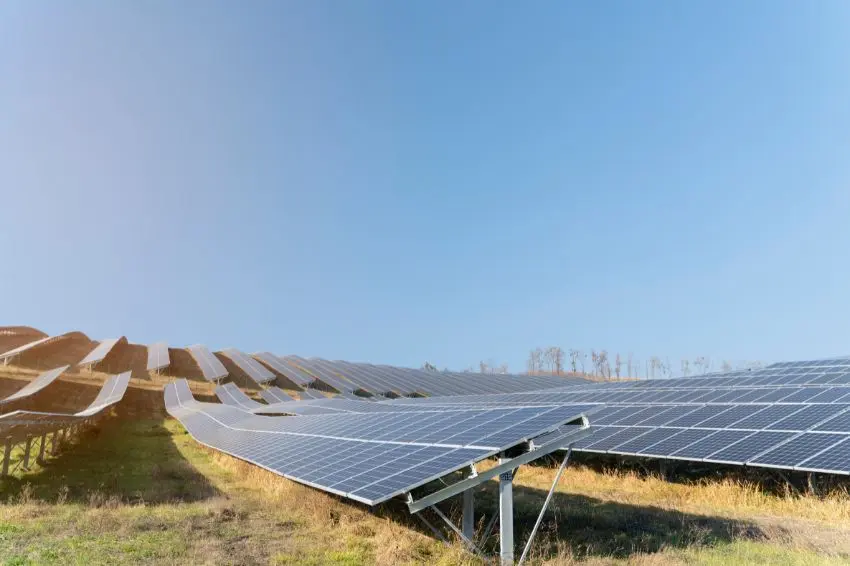
A regulation of the financial compensation mechanism for solar and wind power plants affected by mandatory generation cuts, published by the MME (Ministry of Mines and Energy) was received by ABSOLAR (Brazilian Photovoltaic Solar Energy Association) as an important step forward for the sector, although still insufficient to eliminate the regulatory uncertainties surrounding the so-called curtailment.
In a press release, the organization states that it considers Normative Ordinance MME No. 140 to create a framework for the reimbursement of losses accumulated by businesses, but believes that the lack of clearer criteria for some types of cuts may perpetuate litigation on the subject.
Published this Tuesday (21), in an extra edition of the DOU (Official Gazette of the Union), the ordinance regulates the mechanism provided for in Law No. 15.269/2025 to financially compensate solar and wind generators affected by operational restrictions that occurred between September 1, 2023 and November 25, 2025.
The regulation establishes the steps for agents to join the process, update information, verify disconnections, and calculate the amounts owed, but it does not pre-define the amount of compensation, which will depend on subsequent analyses by the ONS (National System Operator) and the CCEE (Chamber of Electric Energy Commercialization).
MME regulates compensation for solar and wind power plants due to curtailment.
Predictability
In evaluating the ABSOLARThe regulation represents a step that has been awaited since Public Consultation MME No. 210/2025 and offers greater predictability for companies that accumulate losses due to the cuts determined by the ONS.
According to the communiqué of ABSOLARThe organization's CEO, Rodrigo Sauaia, believes that the publication of the ordinance creates a path for businesses to recover some of the financial losses caused by curtailment, while also establishing rules for the signing of the commitment agreement between the agents and the Federal Government.
Nevertheless, the association states that it will conduct a detailed analysis of the regulations, together with its members, before defining its final position on joining the mechanism.
Among the points considered positive, the ABSOLAR It highlights the provision for reimbursement of outages classified as electrical unavailability and reliability that occurred between September 2023 and November 2025, as stipulated in Law No. 15.269/2025.
The entity also considers it relevant that solar generators may present irradiance data and productivity curves referring to the period in which there was still no specific methodology for calculating compensation, allowing for a more accurate assessment of the amounts due.
For later periods, the regulation also authorizes the revision of irradiance and wind data, while the ONS (National System Operator) will develop a tool for updating this information in batches.
Judicialization is still a concern.
ABSOLARHowever, it understands that regulation alone will hardly end the legal proceedings related to renewable energy generation cuts. According to the entity, the simple expression of interest foreseen in the ordinance does not imply an immediate waiver of existing lawsuits.
The association argues that only after all stages of investigation, classification of cuts, and confirmation of the actual reimbursement amounts have been completed will it be possible to assess, with legal certainty, the potential withdrawal of ongoing lawsuits.
Until then, interested parties must express their adherence to the commitment agreement by August 10th, while ONS and CCEE will conduct the recalculations that will define the amounts actually owed.
Open questions
The main point of divergence pointed out by ABSOLAR This relates to events classified as energy oversupply.
Although the ordinance contemplates compensation for outages associated with electrical reliability, the entity notes that the regulation left out proposals presented during the discussion of the standard to exclude from the calculation of oversupply factors that are not the responsibility of the generators, such as GFOM (Generation Outside the Order of Merit) and distributed generation.
Furthermore, the association believes that the text does not establish sufficiently objective criteria to differentiate the types of operational cuts carried out by the ONS.
According to the statement, for the vice president of centralized generation of ABSOLARAccording to Eduardo Azevedo, this lack of clear parameters perpetuates criticism of the so-called "black box model" used in classifying power cuts, hindering investor predictability and preserving an environment of regulatory uncertainty, especially in cases classified as oversupply of energy.
According to him, defining transparent, auditable, and technically objective criteria remains essential for reducing conflicts and increasing confidence in the regulatory environment.
Next Steps
A ABSOLAR It also informs that it will continue working with the MME, to ANEEL (National Electric Energy Agency), to ONS, to CCEE and to other bodies involved in order to improve curtailment regulation.
According to the organization, the goal is to contribute to the creation of clearer and more legally sound rules, capable of reducing the perception of risk, restoring investor confidence, providing financial sustainability to affected projects, and creating conditions for the resumption of investments in new renewable energy generation projects in the country.
all the content of Canal Solar is protected by copyright law, and partial or total reproduction of this site in any medium is expressly prohibited. If you are interested in collaborating or reusing part of our material, please contact us by email: redacao@canalsolar.com.br.



Comments
Comments are moderated before publication.Comments should be respectful and contribute to a healthy debate. Offensive comments may be removed. The opinions expressed here are those of the authors and do not necessarily reflect the views of the author. Canal Solar.